













Saturday, February 21, 2026
ISSN 2765-8767
  • Survey
  • Podcast
  • Write for Us
  • My Account
  • Log In
Daily Remedy
  • Home
  • Articles
  • Podcasts
    Debunking Myths About GLP-1 Medications

    Debunking Myths About GLP-1 Medications

    February 16, 2026
    The Future of LLMs in Healthcare

    The Future of LLMs in Healthcare

    January 26, 2026
    The Future of Healthcare Consumerism

    The Future of Healthcare Consumerism

    January 22, 2026
    Your Body, Your Health Care: A Conversation with Dr. Jeffrey Singer

    Your Body, Your Health Care: A Conversation with Dr. Jeffrey Singer

    July 1, 2025

    The cost structure of hospitals nearly doubles

    July 1, 2025
    Navigating the Medical Licensing Maze

    The Fight Against Healthcare Fraud: Dr. Rafai’s Story

    April 8, 2025
  • Surveys

    Surveys

    How Confident Are You in RFK Jr.’s Health Leadership?

    How Confident Are You in RFK Jr.’s Health Leadership?

    February 16, 2026
    AI in Healthcare Decision-Making

    AI in Healthcare Decision-Making

    February 1, 2026

    Survey Results

    Can you tell when your provider does not trust you?

    Can you tell when your provider does not trust you?

    January 18, 2026
    Do you believe national polls on health issues are accurate

    National health polls: trust in healthcare system accuracy?

    May 8, 2024
    Which health policy issues matter the most to Republican voters in the primaries?

    Which health policy issues matter the most to Republican voters in the primaries?

    May 14, 2024
    How strongly do you believe that you can tell when your provider does not trust you?

    How strongly do you believe that you can tell when your provider does not trust you?

    May 7, 2024
  • Courses
  • About Us
  • Contact us
  • Support Us
  • Official Learner
No Result
View All Result
  • Home
  • Articles
  • Podcasts
    Debunking Myths About GLP-1 Medications

    Debunking Myths About GLP-1 Medications

    February 16, 2026
    The Future of LLMs in Healthcare

    The Future of LLMs in Healthcare

    January 26, 2026
    The Future of Healthcare Consumerism

    The Future of Healthcare Consumerism

    January 22, 2026
    Your Body, Your Health Care: A Conversation with Dr. Jeffrey Singer

    Your Body, Your Health Care: A Conversation with Dr. Jeffrey Singer

    July 1, 2025

    The cost structure of hospitals nearly doubles

    July 1, 2025
    Navigating the Medical Licensing Maze

    The Fight Against Healthcare Fraud: Dr. Rafai’s Story

    April 8, 2025
  • Surveys

    Surveys

    How Confident Are You in RFK Jr.’s Health Leadership?

    How Confident Are You in RFK Jr.’s Health Leadership?

    February 16, 2026
    AI in Healthcare Decision-Making

    AI in Healthcare Decision-Making

    February 1, 2026

    Survey Results

    Can you tell when your provider does not trust you?

    Can you tell when your provider does not trust you?

    January 18, 2026
    Do you believe national polls on health issues are accurate

    National health polls: trust in healthcare system accuracy?

    May 8, 2024
    Which health policy issues matter the most to Republican voters in the primaries?

    Which health policy issues matter the most to Republican voters in the primaries?

    May 14, 2024
    How strongly do you believe that you can tell when your provider does not trust you?

    How strongly do you believe that you can tell when your provider does not trust you?

    May 7, 2024
  • Courses
  • About Us
  • Contact us
  • Support Us
  • Official Learner
No Result
View All Result
Daily Remedy
No Result
View All Result
Home News

Hearing Aids Now Available Over-the-Counter

Available as low as $199 and without a prescription

Phil Galewitz by Phil Galewitz
October 18, 2022
in News
0
Hearing Aids Now Available Over-the-Counter

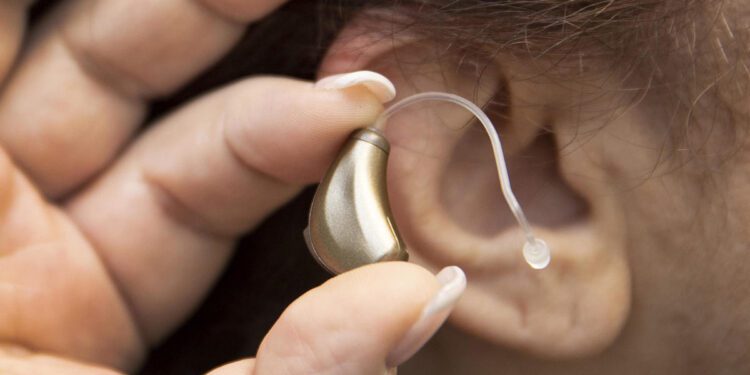
Starting Monday, October 17th, consumers will be able to buy hearing aids directly off store shelves and at dramatically lower prices as a 2017 federal law finally takes effect.

Where for decades it cost thousands of dollars to get a device that could be purchased only with a prescription from an audiologist or other hearing professional, now a new category of over-the-counter aids are selling for hundreds of dollars. Walmart says it will sell a hearing aid for as little as $199.

The over-the-counter aids are intended for adults with mild to moderate hearing loss — a market of tens of millions of people, many of whom have until now avoided getting help because devices were so expensive.

“From a conceptual point of view, this is huge that this is finally happening,” said Dr. Frank Lin, director of the Cochlear Center for Hearing and Public Health at Johns Hopkins University in Baltimore. He predicts it could take a couple of years for the new market to shake out as manufacturers and retailers get accustomed to selling aids and consumers become familiar with the options.

Hearing care experts say they are pleased to see the lower prices. Lin said he believes prices will fall further as more competitors enter the market in the next two years.

Prices and features will vary for the new OTC hearing aids — much as they do for prescription aids. A pair of prescription devices typically sells for $2,000 to $8,000. Some of the technology found in the pricier prescription aids will be available in the cheaper OTC aids.

The OTC aids cost less partly because they do not bundle the services of an audiologist for a hearing evaluation, fitting, and fine-tuning the device. Instead, the new devices are intended to be set up by the consumers themselves, although manufacturers will offer technical assistance through apps and by phone.

Some new companies have entered the market, including Sony. It will sell its lowest-cost, self-fitting OTC hearing aid for $999 at Best Buy and other retailers.

Walmart said it will offer an assortment of OTC hearing aids, including some at $199 to $299 per pair from the South Africa-based company hearX, which also makes Lexie devices. Initially, the devices will be available at Walmart stores in Colorado, Michigan, Missouri, Ohio, Pennsylvania, Tennessee, and Texas. But the company expects to make them available nationwide soon.

Walgreens will offer the Lexie Lumen OTC hearing aid for $799 a pair. The offerings at Walgreens, CVS, Best Buy, and Walmart will also include a Lexie hearing aid developed in partnership with Bose.

Costco, one of the largest sellers of hearing aids dispensed through a hearing professional, would not reveal whether it will offer any over the counter.

De Wet Swanepoel, the co-founder of hearX, said its Lexie Lumen OTC hearing aid will allow consumers to program it to their needs. Other OTC devices will offer preprogrammed settings.

“There are a lot of products out on the market and there is going to be a need for a lot of education for consumers about what is the difference between devices,” he said.

Some consumers may want to see an audiologist either in person or online to get their hearing tested before buying an OTC aid, Lin said. An audiologist could also recommend which hearing aid is best for their kind of hearing loss. Traditional fee-for-service Medicare and most health insurers cover routine hearing tests. But Medicare and most private insurers don’t cover the cost of hearing aids, although many private Medicare Advantage plans do.

Consumers can also take hearing tests online or through an app on their phone or computer, Lin said.

Another factor that could fuel demand for the new devices is that the stigma of wearing a hearing aid is diminishing because people commonly use ear devices to listen to music.

More than 37 million American adults have trouble hearing, and only 1 in 4 adults who could benefit from a hearing aid have used one, federal health officials estimate.

The hearing aid industry has remained largely insulated from price competition because of consolidation among manufacturers, widespread state licensing laws that mandate sales through audiologists or other hearing professionals, and the acquisition of hearing professionals’ practices by device-makers.

Spurred by decades of complaints about the high cost of hearing aids, Congress in 2017 ordered the Food and Drug Administration to set rules that would enable over-the-counter sales, with hopes it would boost competition and lower prices. But the covid pandemic slowed the FDA effort, and last year President Joe Biden ordered the FDA to produce those rules. The final regulations were announced two months ago. Under the federal rules, the new category of hearing aids bypasses state dispensing laws.

Audiologists, who could lose business, caution that the new category won’t help people with severe hearing loss. And over-amplifying sound can damage hearing, said Sarah Sydlowski, past president of the American Academy of Audiology.

However, Nicholas Reed, an audiologist and assistant professor at the Bloomberg School of Public Health at Johns Hopkins, said the devices are likely less dangerous than listening to music with earbuds turned up too high. The regulations require the new aids to have safe maximum audio levels to help protect consumers’ hearing.

Tom Powers, a hearing aid industry consultant in New Jersey, said the new devices will be clearly labeled as FDA approved and consumers should watch for that. These are different from inexpensive personal devices that amplify sound but do not address other components of hearing loss, such as distortion.

Reed recommends looking for OTC hearing aids with generous return policies, exceeding a month. Consumers may want to try a device for a few weeks to see how it works. If one brand doesn’t work, they should try another.

Switching may be necessary, since it’s unclear whether consumers will get in-store help in selecting an aid without an audiologist. Some stores plan to provide assistance. Walmart said it would include information on its website to help people find devices that are right for them.

Reed also said consumers should look for devices labeled as “self-fitting” because it shows the companies have proved to the FDA that people can set up these devices themselves about as well as if they had professional help.

“If you are tech savvy, then I say jump right in,” Reed said, though noting “there is nothing wrong with talking to a trained audiologist.”

Nancy M. Williams, president of Auditory Insight, a hearing health care management consulting firm, said she reviewed eight major OTC hearing aid products, from $499 to $1,299. Some look like earbuds or are nearly invisible, while some look like traditional hearing aids that wrap around the ear. The OTC aids she reviewed largely have limited or no Bluetooth connectivity, a feature that allows users to customize the devices, and only about half have rechargeable batteries. But all eight allow the user to personalize the devices based on the results of their hearing test.

She recommends that people try at least three OTC aids to see which works best for them.

The American Academy of Audiology, a professional organization for audiologists, posted information online for consumers about OTC hearing aids, and the Hearing Loss Association of America, a consumer advocacy group, also has online advice.

Barbara Kelley, executive director of the Hearing Loss Association of America, said consumers should take their time looking at new options. “This is all going to be a little confusing,” she said. But the new options, she added, will lead to more people getting help with their hearing. “The benefits outweigh the risks,” she said.

KHN (Kaiser Health News) is a national newsroom that produces in-depth journalism about health issues. Together with Policy Analysis and Polling, KHN is one of the three major operating programs at KFF (Kaiser Family Foundation). KFF is an endowed nonprofit organization providing information on health issues to the nation.

Subscribe to KHN’s free Morning Briefing.

Source: Kaiser Health News
ShareTweet
Phil Galewitz

Phil Galewitz

Phil Galewitz covers Medicaid, Medicare, long-term care, hospitals, and various state health issues. He has covered the health beat for more than two decades. He is a former board member of the Association of Health Care Journalists. In 2004-05, he was a Kaiser Media Fellow and wrote about community solutions for the uninsured. Before coming to KHN, he was at The Palm Beach Post and was a national health industry writer for The Associated Press and The Patriot-News in Harrisburg, Pennsylvania. He has a bachelor’s in health planning and administration and a master’s in public administration with an emphasis in health policy from Penn State University.

Leave a Reply Cancel reply

Your email address will not be published. Required fields are marked *

Videos

This conversation focuses on debunking myths surrounding GLP-1 medications, particularly the misinformation about their association with pancreatic cancer. The speaker emphasizes the importance of understanding clinical study designs, especially the distinction between observational studies and randomized controlled trials. The discussion highlights the need for patients to critically evaluate the sources of information regarding medication side effects and to empower themselves in their healthcare decisions.

Takeaways
GLP-1 medications are not linked to pancreatic cancer.
Peer-reviewed studies debunk misinformation about GLP-1s.
Anecdotal evidence is not reliable for general conclusions.
Observational studies have limitations in generalizability.
Understanding study design is crucial for evaluating claims.
Symptoms should be discussed in the context of clinical conditions.
Not all side effects reported are relevant to every patient.
Observational studies can provide valuable insights but are context-specific.
Patients should critically assess the relevance of studies to their own experiences.
Engagement in discussions about specific studies can enhance understanding

Chapters
00:00
Debunking GLP-1 Medication Myths
02:56
Understanding Clinical Study Designs
05:54
The Role of Observational Studies in Healthcare
Debunking Myths About GLP-1 Medications
YouTube Video DM9Do_V6_sU
Subscribe

2027 Medicare Advantage & Part D Advance Notice

Clinical Reads

BIIB080 in Mild Alzheimer’s Disease: What a Phase 1b Exploratory Clinical Analysis Can—and Cannot—Tell Us

BIIB080 in Mild Alzheimer’s Disease: What a Phase 1b Exploratory Clinical Analysis Can—and Cannot—Tell Us

by Daily Remedy
February 15, 2026
0

Can lowering tau biology translate into a clinically meaningful slowing of decline in people with early symptomatic Alzheimer’s disease? That is the practical question behind BIIB080, an intrathecal antisense therapy designed to reduce production of tau protein by targeting the tau gene transcript. In a phase 1b program originally designed for safety and dosing, investigators later examined cognitive, functional, and global outcomes as exploratory endpoints. The clinical question matters because current disease-modifying options primarily target amyloid, while tau pathology tracks...

Read more

Join Our Newsletter!

Twitter Updates

Tweets by TheDailyRemedy

Popular

  • The Prevention Gap in Dementia Care

    The Prevention Gap in Dementia Care

    0 shares
    Share 0 Tweet 0
  • Healthcare Natural Rights

    0 shares
    Share 0 Tweet 0
  • Healthcare in Space

    1 shares
    Share 0 Tweet 0
  • Heat Safety Tips Every Pregnant Mother Should Know

    0 shares
    Share 0 Tweet 0
  • What is the 411 on the New 988 Hotline?

    0 shares
    Share 0 Tweet 0
  • 628 Followers

Daily Remedy

Daily Remedy offers the best in healthcare information and healthcare editorial content. We take pride in consistently delivering only the highest quality of insight and analysis to ensure our audience is well-informed about current healthcare topics - beyond the traditional headlines.

Daily Remedy website services, content, and products are for informational purposes only. We do not provide medical advice, diagnosis, or treatment. All rights reserved.

Important Links

  • Support Us
  • About Us
  • Contact us
  • Privacy Policy
  • Terms and Conditions

Join Our Newsletter!

  • Survey
  • Podcast
  • About Us
  • Contact us

© 2026 Daily Remedy

No Result
View All Result
  • Home
  • Articles
  • Podcasts
  • Surveys
  • Courses
  • About Us
  • Contact us
  • Support Us
  • Official Learner

© 2026 Daily Remedy
