













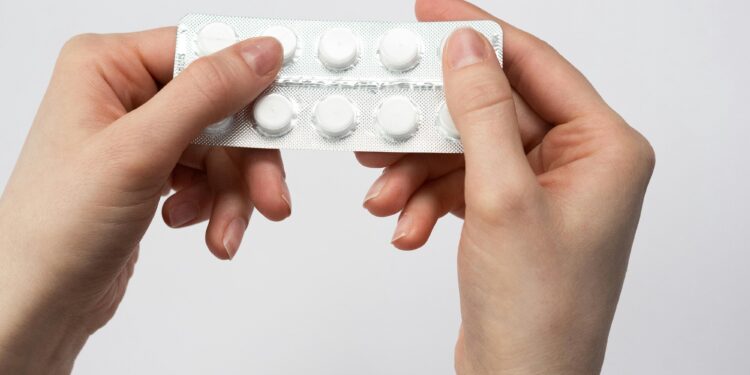
Drug development traditionally rewards efficiency. Oral semaglutide quietly abandoned that principle.
The injectable form of semaglutide achieves near‑complete systemic delivery. Almost every microgram administered eventually interacts with GLP‑1 receptors somewhere within the body. Pharmacokinetic curves behave predictably. Dose escalation produces proportional receptor activation.
From a pharmacologist’s perspective the system is tidy.
The oral version disrupts that neat logic entirely. Bioavailability falls dramatically—sometimes below one percent. The vast majority of the drug never reaches circulation. It dissolves within the digestive tract and disappears into biochemical waste.
Yet the oral formulation exists not because it is efficient but because it is acceptable.
Patient acceptance remains one of the least discussed variables in pharmaceutical economics. Injection therapies, regardless of efficacy, encounter psychological resistance among certain patient populations. Tablets do not. They integrate seamlessly into the behavioral architecture of modern medicine.
Convenience reshapes markets.
Early prescribing patterns suggest that it does.
Some patients initiate therapy with oral formulations before transitioning to injections. Others remain on tablets despite slightly lower metabolic efficacy because the psychological burden of injection therapy outweighs the incremental pharmacologic advantage.
Bioavailability becomes secondary to behavioral economics.
For pharmaceutical manufacturers the implications are substantial. If oral formulations expand the addressable patient population, the inefficiency of gastric absorption becomes economically irrelevant. Manufacturing scale compensates for pharmacologic waste.
The drug industry simply produces more molecules.
This strategy reveals an important shift in pharmaceutical thinking. Instead of optimizing molecules exclusively for biological efficiency, companies increasingly optimize them for human behavior. Delivery systems become tools for influencing patient decisions as much as pharmacokinetic performance.
Oral semaglutide sits precisely at that intersection.
The tablet does not outperform the injection pharmacologically. It does something more subtle. It alters the psychological threshold at which patients enter metabolic therapy. That threshold may prove more important than marginal differences in receptor occupancy.
Healthcare systems are only beginning to understand the implications.
If patient behavior ultimately determines therapeutic adoption, future drug development may prioritize delivery convenience as aggressively as molecular innovation. Bioavailability will still matter—but not always in the ways pharmacologists once assumed.
In the strange economics of modern metabolic medicine, sometimes losing ninety‑nine percent of a drug is still profitable if the remaining one percent changes patient behavior.



