












Tuesday, February 3, 2026
ISSN 2765-8767
  • Survey
  • Podcast
  • Write for Us
  • My Account
  • Log In
Daily Remedy
  • Home
  • Articles
  • Podcasts
    The Future of LLMs in Healthcare

    The Future of LLMs in Healthcare

    January 26, 2026
    The Future of Healthcare Consumerism

    The Future of Healthcare Consumerism

    January 22, 2026
    Your Body, Your Health Care: A Conversation with Dr. Jeffrey Singer

    Your Body, Your Health Care: A Conversation with Dr. Jeffrey Singer

    July 1, 2025

    The cost structure of hospitals nearly doubles

    July 1, 2025
    Navigating the Medical Licensing Maze

    The Fight Against Healthcare Fraud: Dr. Rafai’s Story

    April 8, 2025
    Navigating the Medical Licensing Maze

    Navigating the Medical Licensing Maze

    April 4, 2025
  • Surveys

    Surveys

    AI in Healthcare Decision-Making

    AI in Healthcare Decision-Making

    February 1, 2026
    Patient Survey: Understanding Healthcare Consumerism

    Patient Survey: Understanding Healthcare Consumerism

    January 18, 2026

    Survey Results

    Can you tell when your provider does not trust you?

    Can you tell when your provider does not trust you?

    January 18, 2026
    Do you believe national polls on health issues are accurate

    National health polls: trust in healthcare system accuracy?

    May 8, 2024
    Which health policy issues matter the most to Republican voters in the primaries?

    Which health policy issues matter the most to Republican voters in the primaries?

    May 14, 2024
    How strongly do you believe that you can tell when your provider does not trust you?

    How strongly do you believe that you can tell when your provider does not trust you?

    May 7, 2024
  • Courses
  • About Us
  • Contact us
  • Support Us
  • Official Learner
No Result
View All Result
  • Home
  • Articles
  • Podcasts
    The Future of LLMs in Healthcare

    The Future of LLMs in Healthcare

    January 26, 2026
    The Future of Healthcare Consumerism

    The Future of Healthcare Consumerism

    January 22, 2026
    Your Body, Your Health Care: A Conversation with Dr. Jeffrey Singer

    Your Body, Your Health Care: A Conversation with Dr. Jeffrey Singer

    July 1, 2025

    The cost structure of hospitals nearly doubles

    July 1, 2025
    Navigating the Medical Licensing Maze

    The Fight Against Healthcare Fraud: Dr. Rafai’s Story

    April 8, 2025
    Navigating the Medical Licensing Maze

    Navigating the Medical Licensing Maze

    April 4, 2025
  • Surveys

    Surveys

    AI in Healthcare Decision-Making

    AI in Healthcare Decision-Making

    February 1, 2026
    Patient Survey: Understanding Healthcare Consumerism

    Patient Survey: Understanding Healthcare Consumerism

    January 18, 2026

    Survey Results

    Can you tell when your provider does not trust you?

    Can you tell when your provider does not trust you?

    January 18, 2026
    Do you believe national polls on health issues are accurate

    National health polls: trust in healthcare system accuracy?

    May 8, 2024
    Which health policy issues matter the most to Republican voters in the primaries?

    Which health policy issues matter the most to Republican voters in the primaries?

    May 14, 2024
    How strongly do you believe that you can tell when your provider does not trust you?

    How strongly do you believe that you can tell when your provider does not trust you?

    May 7, 2024
  • Courses
  • About Us
  • Contact us
  • Support Us
  • Official Learner
No Result
View All Result
Daily Remedy
No Result
View All Result
Home Trends

Can India Do The Impossible?

Daily Remedy by Daily Remedy
August 8, 2021
in Trends
0

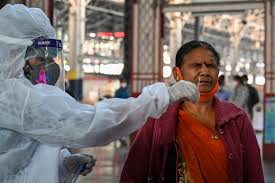
The world’s largest democracy is about to face a once in a life time challenge, begging the question – can India effectively administer the COVID-19 vaccine to its high risk population?

India is set to begin its roll-out in the coming days, but if the issues and set backs other countries have faced are any indication, then India may have its hands full.

India has confirmed over 10 million COVID-19 cases, second in the world to the United States, though around 150,000 people have died from the virus in India, compared to 375,000 deaths in the United States.

India plans to inoculate 300 million people in the first phase of the vaccination program, which includes healthcare and front-line workers, police, and military troops, as well as those with comorbidities who are above the age of 50.

India will lean heavily on the vaccine produced by Serum Institute of India, the world’s largest vaccine manufacturing company, with a stellar record of producing vaccines for tropical countries.

Serum Institute of India’s vaccine does not require the ultra-cold storage facilities that others do. Instead, it can be stored in traditional refrigerators, reducing the cost of storage significantly for a country with a tropical climate.

India, much like the United States, has multiple vaccines available, both domestically and internationally developed. It has a well-defined prioritization protocol that it promises will not be compromised. But unlike the United States, it does not have the storage requirements that the United States has, and faces significantly less logistical challenges than the United States.

But the vaccine India will use has proven less effective than the vaccines in the United States.

Pfizer and Moderna have touted vaccine efficacies well into the 90th percentile, higher than any of the vaccines available in India. But because Pfizer and Moderna require extremely cold storage temperatures and have a relatively short shelf-life, the United State’s government has had to manage a tricky logistical balance of storing and distributing the vaccines at capacities intended to predict the anticipated demand for the vaccine per locale.

Needless to say, that has not always worked out. And a large reason why many vaccines have been delayed stems from the disconnect in anticipated demand and projected supply, with many vaccines sitting in siloes ready to be deployed without a set timeline for when they will be administered.

India, in contrast, has numerous vaccine manufacturers located across major distribution hubs ready to produce the vaccine in a short time. Manufacturing vaccines has never been an issue in India, and India’s strong international presence as an exporter of vaccines has established a foundation for a seamless distribution model domestically.

The other, perhaps equally important reason India will be successful is the exceedingly high confidence the Indian public has in taking the vaccine. An international survey found that Indians are the most keen in the world on getting vaccinated whenever a vaccine becomes available to them, even as people in 10 out of 15 countries show a growing reluctance about getting vaccinated.

The survey found that 87% of Indians who responded are intent on receiving the vaccine, despite 34% being worried about side effects, and 16% being concerned about the fast-moving trials. Unlike other countries, however, these concerns have not deterred the willingness to get vaccinated. A unique predisposition that may bode well for a successful vaccination campaign.

In the United States we find unexpected, widespread hesitancy to receive the vaccine, even among healthcare and front-line workers. That sentiment does not exist in India. The counter-culture sense of distrust in science seems to be absent in India, and may result in a greater percentage of the population willing to take the vaccine.

Additionally, and perhaps most uniquely, 93% of the respondents surveyed believe the Indian government, particularly their prime minister, Narendra Modi, is doing a good job handling the COVID-19 response. That unprecedented level of trust in a country’s leader is typically reserved for times of war, and is nearly unheard of among other countries.

Likely the strong response and faith in the Indian government correlates to a strong willingness to take the vaccine. Indicating that demand for the vaccine is likely to remain steadfast among the Indian population throughout the vaccine administration process.

There is much to be optimistic about India’s vaccine roll-out. And there is much we in the United States can learn.

India early on made a clear decision to develop a vaccine that had less stringent storage requirements and more adept for distribution, though the efficacy has proven to be lower than Pfizer and Moderna. The logistical difficulties we face could have been overcome by a vaccine that is easier to transport. And realistically, whether a vaccine is 90% effective or 80% effective matters less than whether the vaccine gets into a patient’s arm.

India has a robust distribution network developed over many years by its vaccine manufacturing industry. And the COVID-19 vaccine will be distributed along this network as it reaches the major cities and rural villages of India. In contrast, the United States developed its own distribution networks through the military via Operation Warp Speed. As the federal government presumed that the military would be better at distributing the vaccine.

But why create a network from scratch as opposed to utilizing existing distribution networks? A seemingly obvious decision the United States got wrong.

The United States could have relied on medical distributors to store and distribute the vaccine. Instead, it created ad hoc partnerships throughout the country depending on available sub-thermal storage capacity.

India’s logistical advantage over the United States will serve India well early in the vaccine administration process. There will be fewer incidences of vaccines spoiling or vaccines not reaching its intended location in time.

But India’s sustained success is will come from the consistent and overwhelmingly high demand for the vaccine. It is easy to know how many vaccines to distribute in a given town when you can assume nearly every person will take the vaccine. It is more difficult when the demand waxes and wanes based upon recent tweets or political rhetoric.

The difficulties the United States have faced with counter-cultural and anti-science movements manifested most prominently when the vaccine first became available.

Demand dropped as many Americans were reluctant to be the first vaccinated. And only rose after millions upon millions of Americans received the vaccine. In India there is a low chance of any initial hesitancy, and it likely that the willingness to take the vaccine will remain high throughout the campaign.

Giving India an enormous opportunity to prove itself on the world stage. And giving the United States and other countries an opportunity to learn how to emulate a nationwide distribution model for vaccines.


ShareTweet
Daily Remedy

Daily Remedy

Dr. Jay K Joshi serves as the editor-in-chief of Daily Remedy. He is a serial entrepreneur and sought after thought-leader for matters related to healthcare innovation and medical jurisprudence. He has published articles on a variety of healthcare topics in both peer-reviewed journals and trade publications. His legal writings include amicus curiae briefs prepared for prominent federal healthcare cases.

Leave a Reply Cancel reply

Your email address will not be published. Required fields are marked *

Videos

In this episode, the host discusses the significance of large language models (LLMs) in healthcare, their applications, and the challenges they face. The conversation highlights the importance of simplicity in model design and the necessity of integrating patient feedback to enhance the effectiveness of LLMs in clinical settings.

Takeaways
LLMs are becoming integral in healthcare.
They can help determine costs and service options.
Hallucination in LLMs can lead to misinformation.
LLMs can produce inconsistent answers based on input.
Simplicity in LLMs is often more effective than complexity.
Patient behavior should guide LLM development.
Integrating patient feedback is crucial for accuracy.
Pre-training models with patient input enhances relevance.
Healthcare providers must understand LLM limitations.
The best LLMs will focus on patient-centered care.

Chapters

00:00 Introduction to LLMs in Healthcare
05:16 The Importance of Simplicity in LLMs
The Future of LLMs in HealthcareDaily Remedy
YouTube Video U1u-IYdpeEk
Subscribe

AI Regulation and Deployment Is Now a Core Healthcare Issue

Clinical Reads

Ambient Artificial Intelligence Clinical Documentation: Workflow Support with Emerging Governance Risk

Ambient Artificial Intelligence Clinical Documentation: Workflow Support with Emerging Governance Risk

by Daily Remedy
February 1, 2026
0

Health systems are increasingly deploying ambient artificial intelligence tools that listen to clinical encounters and automatically generate draft visit notes. These systems are intended to reduce documentation burden and allow clinicians to focus more directly on patient interaction. At the same time, they raise unresolved questions about patient consent, data handling, factual accuracy, and legal responsibility for machine‑generated records. Recent policy discussions and legal actions suggest that adoption is moving faster than formal oversight frameworks. The practical clinical question is...

Read more

Join Our Newsletter!

Twitter Updates

Tweets by TheDailyRemedy

Popular

  • How Insurers Taught Patients to Shop

    How Insurers Taught Patients to Shop

    0 shares
    Share 0 Tweet 0
  • Interoperability Is No Longer a Technical Debate. It Is a Power Debate.

    0 shares
    Share 0 Tweet 0
  • Semaglutide: Keeps Getting Better

    1 shares
    Share 0 Tweet 0
  • The Quiet Revolution in the Exam Room: AI Tools That Change Work, Not Headlines

    0 shares
    Share 0 Tweet 0
  • Healthy Holiday Food Choices for Patients

    0 shares
    Share 0 Tweet 0
  • 628 Followers

Daily Remedy

Daily Remedy offers the best in healthcare information and healthcare editorial content. We take pride in consistently delivering only the highest quality of insight and analysis to ensure our audience is well-informed about current healthcare topics - beyond the traditional headlines.

Daily Remedy website services, content, and products are for informational purposes only. We do not provide medical advice, diagnosis, or treatment. All rights reserved.

Important Links

  • Support Us
  • About Us
  • Contact us
  • Privacy Policy
  • Terms and Conditions

Join Our Newsletter!

  • Survey
  • Podcast
  • About Us
  • Contact us

© 2026 Daily Remedy

No Result
View All Result
  • Home
  • Articles
  • Podcasts
  • Surveys
  • Courses
  • About Us
  • Contact us
  • Support Us
  • Official Learner

© 2026 Daily Remedy