













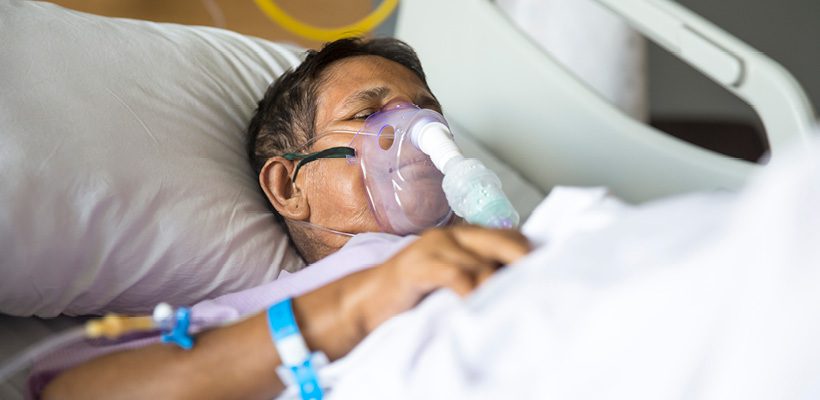
“Any patient with any generalized upper respiratory tract infection or any allergy symptom should be labelled with a ‘suspected rhinovirus’ admitting diagnosis”, Serge said definitively, with all the gravitas of a hospital CEO.
“Sir, that will give off the impression that we have dozens upon dozens of cases when it could really be a whole host of diseases with similar symptoms”, Serhat, his administrative assistant petitioned.
“We cannot take the risk that we miss a rhinovirus case – the media will be down our throats, not to mention the competition – who knows how accurate these other hospitals are. Test everybody, and when in doubt, diagnose and code according to what I said.” Serge responded definitively, tapping his index finger on the table for effect.
“Those tests would turn positive if anybody ever had the virus, in the distant past or in the past few months and will conflate disease management if their primary symptoms are from another disease altogether.
“Boss think about it, if we label every symptoms, even generalized inconclusive symptoms as ‘suspected rhinovirus’, and test everybody regardless of actual clinical need, we will give off the impression that we are flooded with viral cases when we are just attributing multiple symptoms to one cause and testing people excessively – knowing there is a risk of false positives that increases with every additional unnecessary test.”
Serhat began wringing his hands as he spoke, growing increasingly nervous with every word uttered. And after he finished speaking, the extended silence only made him more nervous. Serge let Serhat’s last words hang in silence, knowing the void of words, the proverbial nonresponse, would temper any pushback from Serhat.
“We cannot risk it – you will do as I say”, Serge said, putting an end to Serhat’s silent misery. He spoke softly but firmly and continued to tap his finger on the desk for emphasis – a sign Serhat knows well and responded by scurrying out of the room.
That conversation was yesterday, today Serge sits in his chair reviewing the numbers describing the patient activity for the day: fifty admissions to the emergency department and another twenty directly to the hospital floor, and sixty testing positive though only thirty actually have any cough, fever, or headache.
Serge contemplates over the numbers. He senses Serhat was right, much to his chagrin. He thinks through what to do with the data – he could list all the positives, true or not, symptomatic or not, or attempt to piece through the numbers separating the symptomatic patients from the asymptomatic ones. But then he would have to divide the symptomatic patients based upon their actual diagnosis – and if he does that, his numbers look far less impressive – at least compared to what he thinks the neighboring competitive hospitals are showing.
Never mind that many of the positives came from heart failure patients, work injuries, or diabetic complications – a positive is a positive – he needs to be safe, he rationalizes – but what is safety when the numbers can be interpreted to mean just about anything.
But there is a difference between being safe and being clever, a distinction Serge is acutely aware of. He knows what he wants from the numbers – he wants to establish his hospital as the main healthcare center in the area for patient referrals. And by claiming more rhinovirus cases, he can make the claim that his hospital has treated more cases than any other hospital in the area – and market his hospital as the local leader for patient care.
Clever marketing, and equally clever use of the numbers.
But poor Serhat, often right but mostly ignored, sees the data from a medical standpoint, not for any financial value or marketing advantage it may glean – and keenly observes Serge’s intention in misdirecting the data. Falsely attributing vague, generalized symptoms to one disease skews the numbers and distorts the overall impression – a distortion Serge wants – not for medical purposes, but for marketing purposes.
So to make the distortion a reality, he mandates testing for all patients knowing it will turn out far more positives than the actual number of cases, making the virus seem far more viral – like marketing a hit song before the song even hits.
After all, Serge has a business to run – again he rationalizes. Although if you are skewing medical data to create an artificially high impression of reported viral cases, what type of business are you really running? For Serge the line between medicine and marketing has blurred to where the more rhinoviruses, the better for business. Though one could argue that is the case with all diseases. More heart failure, more lung cancers, more everything means a better bottom line.
So does that mean more testing is better too?
Something Serge ponders as he calls Serhat into his office.
“Yes sir?”, Serhat opens eagerly, his tepid voice matching his stride.
“What’s the balance between ethical marketing and exploiting people’s fears about some medical unknown?”, Serge opens, hardly giving Serhat a chance to settle in.
“That’s not for me to decide, sir”, Serhat responds, openly displaying his apprehension, knowing full well where the upcoming line of questioning is going.
“Cut the bullshit. You know what I’m trying to do, you know the effects of playing with the numbers this way. Tell me your opinion – your honest opinion – where is the line?”
Serhat relaxes his demeanor and stares at Serge blankly, and then furrows his eyebrows to give a look of concern. “Honestly?” he opens.
“Honestly”, Serge responds, now without his usual tone of authority.
“A person is both a consumer and a patient, though never the two at the same time – it is not a ‘both’ thing, it is an ‘either-or’ thing – a person is acting as a patient or as a consumer at any given time. We can market to the consumer, but we should never market to the patient – only treat the patient. And we should never treat the consumer.”
“I’m not following”, Serge interrupts, pushing himself up in his chair to focus his attention.
“A person can behave like a consumer, buying soap and what not, as – you know – basic hygiene care. A person can also hoard soap out of fear of a massive plague and can believe that buying soap will provide some sort of treatment – like hand sanitization through regular hand cleaning. Both are the same actions, technically, but the motivations are fundamentally different. Similarly, in choosing a hospital, people make decisions as consumers and as patients. If we market to their consumer side, we are marketing ethically. If we market to their patient side, we are marketing unethically.”
“Okay, I get it, in principle – so apply that logic to the rhinovirus”, Serge says as he grabs a piece of paper to jot notes.
“We should not perform fear based medical care – knowing it is fear based – by rebranding it as a marketing tool. That’s scaring patients into believing something untrue. That’s effectively what we are doing by testing everybody.
“Instead, we should market ourselves as an information leader in the community for the rhinovirus, providing excellent care for those who need it – and let the numbers speak for themselves – by investing time in explaining the numbers – clarity over context, at least when it comes to the numbers. We market the integrity of the data to the consumers, and let people decide if appealing to their consumer side justifies their decision to come to the hospital – justifies making the decision as a patient to come to us.
“So essentially we market to people as consumers in way where their consumer side appeals to their patient side?”
“Yes”, Serhat responds with unchecked enthusiasm, happy that Serge is listening for once. “It is not B to C marketing, but B to C to P marketing – business to consumer to patient marketing.
“I like it”, Serge responds in kind, matching the enthusiasm. “I think we found our new marketing campaign!”
Later that day Serge reviews the data from earlier and crafts a strategy based upon information transparency and data integrity. “Here are the raw rhinovirus numbers, come and learn the meaning behind the numbers!”, he boasts aloud, hands gesturing about, reenacting a speech to an imaginary audience.
Brilliant, Serge thinks, as he closes for the day, reflecting over the conversation he had with Serhat earlier in the day.
He notices a subtle satisfaction growing within, an inner sense of pride, knowing he is doing good and will likely do well with this new campaign. He feels for the first time in a long time that he is not toting some proverbial ethical line – that he does not have to compromise between decisions that are in the best interest of his patients or for his hospital.
He had always assumed the two hung in some sort of balance, that by focusing on one, you compromise the other. But thanks to Serhat, Serge now realizes that he can be equally, if not more effective by addressing both sides together.
That marketing to people by empowering them as patients can be just as powerful as using fear to coerce them as consumers – and far more ethical.



