












Friday, April 24, 2026
ISSN 2765-8767
  • Survey
  • Podcast
  • Write for Us
  • My Account
  • Log In
Daily Remedy
  • Home
  • Articles
  • Podcasts
    How NADAC, WAC, and ASP Shape Drug Costs

    How NADAC, WAC, and ASP Shape Drug Costs

    April 20, 2026
    The Hidden Costs Employers Don’t See in Traditional Health Plans

    The Hidden Costs Employers Don’t See in Traditional Health Plans

    March 22, 2026
    The Impact of COVID-19 on Patient Trust

    The Impact of COVID-19 on Patient Trust

    March 3, 2026
    Debunking Myths About GLP-1 Medications

    Debunking Myths About GLP-1 Medications

    February 16, 2026
    The Future of LLMs in Healthcare

    The Future of LLMs in Healthcare

    January 26, 2026
    The Future of Healthcare Consumerism

    The Future of Healthcare Consumerism

    January 22, 2026
  • Surveys

    Surveys

    Public Perception of Peptide Regulation and Compounding Practices

    Public Perception of Peptide Regulation and Compounding Practices

    April 19, 2026
    Understanding of Clinical Evidence in Peptide and Hormone Use

    Understanding of Clinical Evidence in Peptide and Hormone Use

    March 30, 2026

    Survey Results

    Can you tell when your provider does not trust you?

    Can you tell when your provider does not trust you?

    January 18, 2026
    Do you believe national polls on health issues are accurate

    National health polls: trust in healthcare system accuracy?

    May 8, 2024
    Which health policy issues matter the most to Republican voters in the primaries?

    Which health policy issues matter the most to Republican voters in the primaries?

    May 14, 2024
    How strongly do you believe that you can tell when your provider does not trust you?

    How strongly do you believe that you can tell when your provider does not trust you?

    May 7, 2024
  • Courses
  • About Us
  • Contact us
  • Support Us
  • Official Learner
No Result
View All Result
  • Home
  • Articles
  • Podcasts
    How NADAC, WAC, and ASP Shape Drug Costs

    How NADAC, WAC, and ASP Shape Drug Costs

    April 20, 2026
    The Hidden Costs Employers Don’t See in Traditional Health Plans

    The Hidden Costs Employers Don’t See in Traditional Health Plans

    March 22, 2026
    The Impact of COVID-19 on Patient Trust

    The Impact of COVID-19 on Patient Trust

    March 3, 2026
    Debunking Myths About GLP-1 Medications

    Debunking Myths About GLP-1 Medications

    February 16, 2026
    The Future of LLMs in Healthcare

    The Future of LLMs in Healthcare

    January 26, 2026
    The Future of Healthcare Consumerism

    The Future of Healthcare Consumerism

    January 22, 2026
  • Surveys

    Surveys

    Public Perception of Peptide Regulation and Compounding Practices

    Public Perception of Peptide Regulation and Compounding Practices

    April 19, 2026
    Understanding of Clinical Evidence in Peptide and Hormone Use

    Understanding of Clinical Evidence in Peptide and Hormone Use

    March 30, 2026

    Survey Results

    Can you tell when your provider does not trust you?

    Can you tell when your provider does not trust you?

    January 18, 2026
    Do you believe national polls on health issues are accurate

    National health polls: trust in healthcare system accuracy?

    May 8, 2024
    Which health policy issues matter the most to Republican voters in the primaries?

    Which health policy issues matter the most to Republican voters in the primaries?

    May 14, 2024
    How strongly do you believe that you can tell when your provider does not trust you?

    How strongly do you believe that you can tell when your provider does not trust you?

    May 7, 2024
  • Courses
  • About Us
  • Contact us
  • Support Us
  • Official Learner
No Result
View All Result
Daily Remedy
No Result
View All Result
Home Politics & Law

Administrative Acts of Healthcare Crime

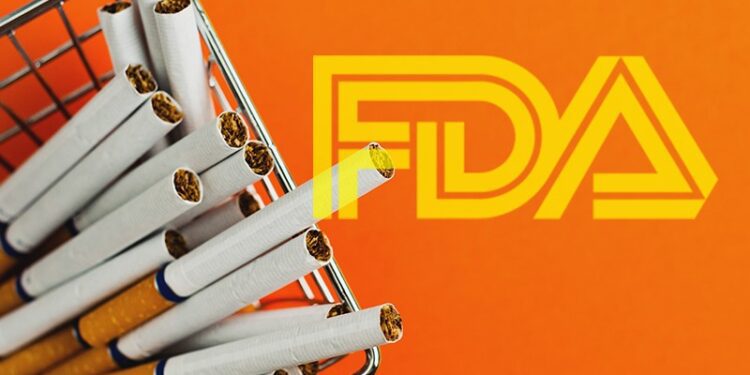
The FDA is using the DOJ to turn regulations into crimes

Daily Remedy by Daily Remedy
March 28, 2024
in Politics & Law
0
Administrative Acts of Healthcare Crime

Public perception is a funny thing. It’s an illusion we all see, know full well it’s an illusion, and we accept it. Through public perception, lies become truths and opinions become law.

“I’m fully aware of the misperceptions that are out there and aren’t consistent with the known science. We do know that e-cigarettes — as a general class — have markedly less risk than a combustible cigarette product. That said, I think it’s very critical that we inform any communication campaigns using science and evidence. It has to be very carefully thought out to ensure that we’re maximizing impact and avoiding unintended consequences.”

Those were the words of Dr. Brian King, Director of the Food and Drug Administration’s (FDA) Center for Tobacco Products (CTP), conveyed in a recent interview when asked about the balance between traditional cigarettes – the combustible cigarette product – and electronic cigarettes, better known as vaping cigarettes.

He was nuanced and insightful in the interview, keen to parse through the clinical evidence and the compromises needed to enact public health policy. Yet, his words stand in contrast with the administrative actions of the FDA, which recently requested the Department of Justice (DOJ) to file injunctions – a court order requiring an entity to cease a specific action – against six vaping cigarette manufacturers. The injunctions demand the six companies immediately cease the production and sale of their electronic cigarettes.

It was a blunt and direct action, one that contradicts Dr. King’s earlier words. Whereas before he was keen to stick to clinical data, now it appears he’s willing to be quite heavy-handed.

“We will not stand by as manufacturers repeatedly break the law, especially after being afforded multiple opportunities to comply.”

This was Dr. King in an excerpt cited from the official notice provided by the FDA detailing the injunctions unveiled in coordination with the DOJ. He was referencing the many warning letters issued by the FDA to the six companies. Indeed, the FDA had made multiple attempts in good faith, requesting the companies to comply with their standards.

Between January 2021 and September 2022, the FDA issued nearly 300 warning letters. Despite the sufficient notice, the companies failed to comply. As a result, for the first time, the FDA initiated injunction proceedings to enforce their regulations.

In all fairness, these six manufacturers left the FDA with no choice. They were all warned, educated on the regulatory requirements, but failed to comply.

When viewed in isolation, it seems like the appropriate course of action by the FDA. In the world of public perception, however, it feels like something different. It feels like the government is encroaching into the vaping cigarette industry.

When phrased in such an explicit way, it sounds preposterous. The FDA was simply enforcing regulatory rules that all tobacco companies must comply with. What’s the harm in that?

Well, the harm comes from the unintended consequences, which manifest through the public perceptions gleaned by the media coverage. This injunction, when coupled with other acts of federal oversight, namely the string of lawsuits against lead vaping manufacturer Juul, and the growing number of crackdowns against illicit vaping manufacturers, feels like another nail in the coffin for vaping.

Most of the internet feels the same way. Since the injunction was announced, the number of Google searches for “vaping” and “banned” has increased significantly. Even the framing of vaping on the internet has shifted. We see article after article highlighting the same refrain that begins by claiming how we all erroneously believed vaping was a safer alternative, and ends by referencing studies that highlight the side effects of vaping while coupling it with adolescent drug use, as though it’s the preferred drug of abuse among teens.

This is yet another instance of good reporting leading to unintended misinformation. Journalists use data to tell stories. As it currently stands, the data show teens are suffering from lung injuries because of vaping abuse.

While vaping is undoubtedly abused, it’s also helpful when used in the right context. That’s the problem. Data is often manipulated to tell only a part of the story. The context gives data clinical relevance.

The average age of those who indulge in vaping cigarettes is comparable to those who use traditional cigarettes and most usually begin after switching from traditional cigarettes. Clinical studies authorized by the National Institutes of Health (NIH) verify that vaping is safer than traditional cigarettes, when the two are evaluated side by side, as one alternative versus the other. The heightened risk of vaping comes mostly when it’s combined with traditional cigarettes, as the two lead to different forms of lung injury. The context of use determines the overall risk to the user.

But the framing has been set, and now the die is cast. The narrative that vaping is more dangerous than traditional cigarettes and that it’s a drug of abuse among adolescents has been firmly cemented into the American zeitgeist. And no data, no matter how well conveyed, can undo the damage caused by public perception.

The greatest irony of all is that the person who is most aware of the damage caused by the unintended consequences of false narratives is also the one creating those perceptions.


ShareTweet
Daily Remedy

Daily Remedy

Dr. Jay K Joshi serves as the editor-in-chief of Daily Remedy. He is a serial entrepreneur and sought after thought-leader for matters related to healthcare innovation and medical jurisprudence. He has published articles on a variety of healthcare topics in both peer-reviewed journals and trade publications. His legal writings include amicus curiae briefs prepared for prominent federal healthcare cases.

Comments 0

  1. Jim McDonald says:
    3 years ago

    This is a reasonable article. However, no one has ever used the term “vaping cigarettes.” They are electronic cigarettes, better known as e-cigarettes — or just vapes.

    Reply
    • Jay K Joshi says:
      3 years ago

      Thank you for the clarification.

      Reply

Leave a Reply Cancel reply

Your email address will not be published. Required fields are marked *

Videos

summary

An in-depth exploration of drug pricing, including key databases like NADAC, WAC, and ASP, and how they influence the pharmaceutical supply chain, policy, and patient advocacy. The episode also introduces MedPricer's innovative pricing intelligence platform, offering valuable insights for healthcare professionals, policymakers, and patients.

Chapters

00:00 Understanding Drug Pricing Dynamics
03:52 Exploring the Drug Pricing Database
10:07 Patient Advocacy and Drug Pricing
13:56 Market Intelligence in Drug Pricing
How NADAC, WAC, and ASP Shape Drug CostsDaily Remedy
YouTube Video X-Tfwy7XKEg
Subscribe

Policy Shift in Peptide Regulation

Clinical Reads

FDA Evaluation of Certain Bulk Drug Substances in Compounding: Clinical Interpretation

FDA Evaluation of Certain Bulk Drug Substances in Compounding: Clinical Interpretation

by Daily Remedy
April 19, 2026
0

Clinicians increasingly encounter patients using or requesting peptide-based therapies sourced through compounding pharmacies. The U.S. Food and Drug Administration has identified a subset of bulk drug substances, including certain peptides, that may present significant safety risks when used in compounded formulations. The clinical question is whether these regulatory signals reflect meaningful patient-level risk and how they should influence prescribing behavior. This matters because compounded peptides often sit outside traditional approval pathways, creating uncertainty around quality, dosing consistency, and safety. Understanding...

Read more

Join Our Newsletter!

Twitter Updates

Tweets by TheDailyRemedy

Popular

  • National Opioid Settlement Injunction

    National Opioid Settlement Injunction

    1 shares
    Share 0 Tweet 0
  • Strategies for Transitioning Off GLP-1 Injections

    1 shares
    Share 0 Tweet 0
  • Biosimilar Economics Through a Benchmark Lens: What WAC and NADAC Reveal About Competition

    0 shares
    Share 0 Tweet 0
  • PBMs as Price Signal Absorbers: How Formulary Architecture Distorts Benchmark Data

    0 shares
    Share 0 Tweet 0
  • The IRA’s Negotiation Mechanism and What Benchmark Data Will Reveal About Its Actual Effect

    0 shares
    Share 0 Tweet 0
  • 628 Followers

Daily Remedy

Daily Remedy offers the best in healthcare information and healthcare editorial content. We take pride in consistently delivering only the highest quality of insight and analysis to ensure our audience is well-informed about current healthcare topics - beyond the traditional headlines.

Daily Remedy website services, content, and products are for informational purposes only. We do not provide medical advice, diagnosis, or treatment. All rights reserved.

Important Links

  • Support Us
  • About Us
  • Contact us
  • Privacy Policy
  • Terms and Conditions

Join Our Newsletter!

  • Survey
  • Podcast
  • About Us
  • Contact us

© 2026 Daily Remedy

No Result
View All Result
  • Home
  • Articles
  • Podcasts
  • Surveys
  • Courses
  • About Us
  • Contact us
  • Support Us
  • Official Learner

© 2026 Daily Remedy
