












Tuesday, April 14, 2026
ISSN 2765-8767
  • Survey
  • Podcast
  • Write for Us
  • My Account
  • Log In
Daily Remedy
  • Home
  • Articles
  • Podcasts
    The Hidden Costs Employers Don’t See in Traditional Health Plans

    The Hidden Costs Employers Don’t See in Traditional Health Plans

    March 22, 2026
    The Impact of COVID-19 on Patient Trust

    The Impact of COVID-19 on Patient Trust

    March 3, 2026
    Debunking Myths About GLP-1 Medications

    Debunking Myths About GLP-1 Medications

    February 16, 2026
    The Future of LLMs in Healthcare

    The Future of LLMs in Healthcare

    January 26, 2026
    The Future of Healthcare Consumerism

    The Future of Healthcare Consumerism

    January 22, 2026
    Your Body, Your Health Care: A Conversation with Dr. Jeffrey Singer

    Your Body, Your Health Care: A Conversation with Dr. Jeffrey Singer

    July 1, 2025
  • Surveys

    Surveys

    Understanding of Clinical Evidence in Peptide and Hormone Use

    Understanding of Clinical Evidence in Peptide and Hormone Use

    March 30, 2026
    Public Sentiment on the Future of Peptides and Hormone Therapies in U.S. Medicine

    Public Sentiment on the Future of Peptides and Hormone Therapies in U.S. Medicine

    March 17, 2026

    Survey Results

    Can you tell when your provider does not trust you?

    Can you tell when your provider does not trust you?

    January 18, 2026
    Do you believe national polls on health issues are accurate

    National health polls: trust in healthcare system accuracy?

    May 8, 2024
    Which health policy issues matter the most to Republican voters in the primaries?

    Which health policy issues matter the most to Republican voters in the primaries?

    May 14, 2024
    How strongly do you believe that you can tell when your provider does not trust you?

    How strongly do you believe that you can tell when your provider does not trust you?

    May 7, 2024
  • Courses
  • About Us
  • Contact us
  • Support Us
  • Official Learner
No Result
View All Result
  • Home
  • Articles
  • Podcasts
    The Hidden Costs Employers Don’t See in Traditional Health Plans

    The Hidden Costs Employers Don’t See in Traditional Health Plans

    March 22, 2026
    The Impact of COVID-19 on Patient Trust

    The Impact of COVID-19 on Patient Trust

    March 3, 2026
    Debunking Myths About GLP-1 Medications

    Debunking Myths About GLP-1 Medications

    February 16, 2026
    The Future of LLMs in Healthcare

    The Future of LLMs in Healthcare

    January 26, 2026
    The Future of Healthcare Consumerism

    The Future of Healthcare Consumerism

    January 22, 2026
    Your Body, Your Health Care: A Conversation with Dr. Jeffrey Singer

    Your Body, Your Health Care: A Conversation with Dr. Jeffrey Singer

    July 1, 2025
  • Surveys

    Surveys

    Understanding of Clinical Evidence in Peptide and Hormone Use

    Understanding of Clinical Evidence in Peptide and Hormone Use

    March 30, 2026
    Public Sentiment on the Future of Peptides and Hormone Therapies in U.S. Medicine

    Public Sentiment on the Future of Peptides and Hormone Therapies in U.S. Medicine

    March 17, 2026

    Survey Results

    Can you tell when your provider does not trust you?

    Can you tell when your provider does not trust you?

    January 18, 2026
    Do you believe national polls on health issues are accurate

    National health polls: trust in healthcare system accuracy?

    May 8, 2024
    Which health policy issues matter the most to Republican voters in the primaries?

    Which health policy issues matter the most to Republican voters in the primaries?

    May 14, 2024
    How strongly do you believe that you can tell when your provider does not trust you?

    How strongly do you believe that you can tell when your provider does not trust you?

    May 7, 2024
  • Courses
  • About Us
  • Contact us
  • Support Us
  • Official Learner
No Result
View All Result
Daily Remedy
No Result
View All Result
Home Innovations & Investing

The Human Genome Project Pieced Together Only 92% of the DNA – Now Scientists have Filled in the Remaining 8%

The Conversation by The Conversation
April 3, 2024
in Innovations & Investing
0
he Human Genome Project Pieced Together Only 92% of the DNA – Now Scientists have Filled in the Remaining 8%

The Human Genome Project pieced together only 92% of the DNA – now scientists have finally filled in the remaining 8%
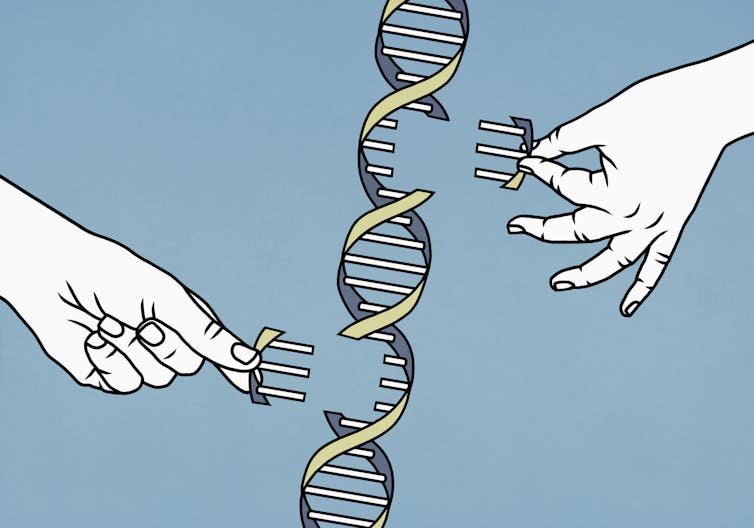
DNA
Over half of the human genome contains repetitive DNA sequences whose functions are still not fully understood.
Malte Mueller/fStop via Getty Images

Gabrielle Hartley, University of Connecticut

When the Human Genome Project announced that they had completed the first human genome in 2003, it was a momentous accomplishment – for the first time, the DNA blueprint of human life was unlocked. But it came with a catch – they weren’t actually able to put together all the genetic information in the genome. There were gaps: unfilled, often repetitive regions that were too confusing to piece together.

With advancements in technology that could handle these repetitive sequences, scientists finally filled those gaps in May 2021, and the first end-to-end human genome was officially published on Mar. 31, 2022.

I am a genome biologist who studies repetitive DNA sequences and how they shape genomes throughout evolutionary history. I was part of the team that helped characterize the repeat sequences missing from the genome. And now, with a truly complete human genome, these uncovered repetitive regions are finally being explored in full for the first time.

The missing puzzle pieces

German botanist Hans Winkler coined the word “genome” in 1920, combining the word “gene” with the suffix “-ome,” meaning “complete set,” to describe the full DNA sequence contained within each cell. Researchers still use this word a century later to refer to the genetic material that makes up an organism.

One way to describe what a genome looks like is to compare it to a reference book. In this analogy, a genome is an anthology containing the DNA instructions for life. It’s composed of a vast array of nucleotides (letters) that are packaged into chromosomes (chapters). Each chromosome contains genes (paragraphs) that are regions of DNA which code for the specific proteins that allow an organism to function.
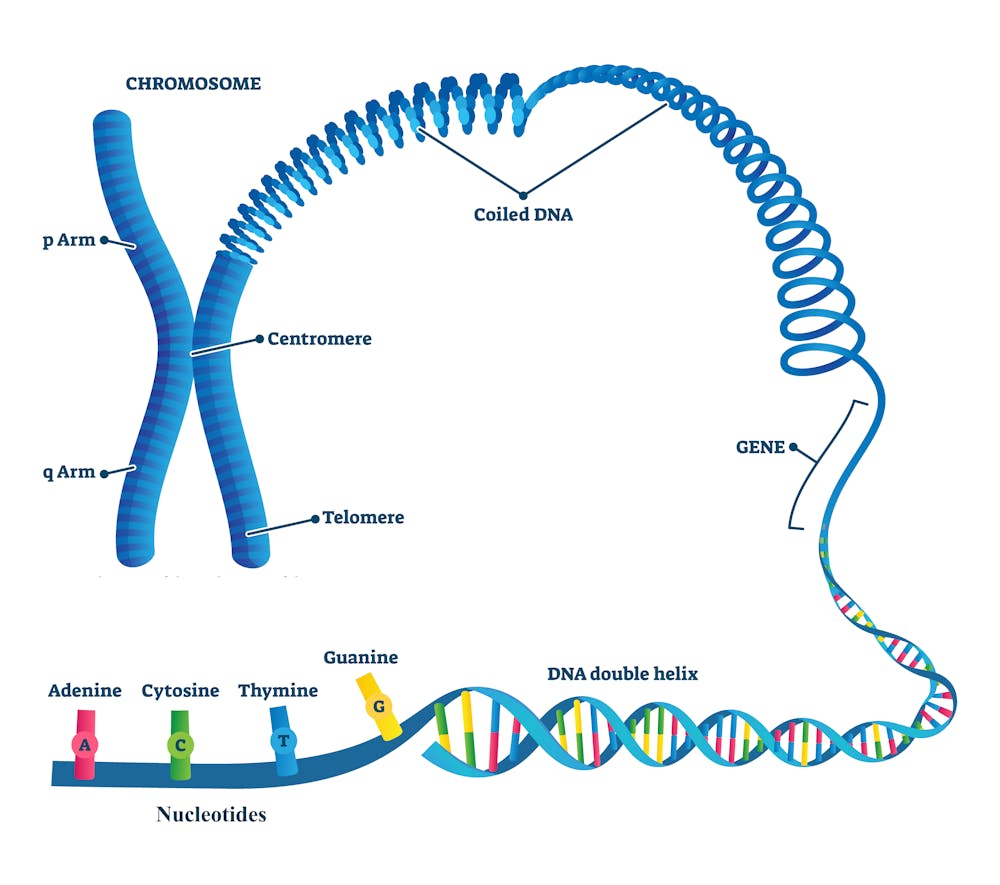
Diagram of chromosome unraveling to coiled DNA, genes and component nucleotides
Genetic material is made of DNA tightly packaged into chromosomes. Only select regions of the DNA in a genome contain genes coding for proteins.
VectorMine/iStock via Getty Images Plus

While every living organism has a genome, the size of that genome varies from species to species. An elephant uses the same form of genetic information as the grass it eats and the bacteria in its gut. But no two genomes look exactly alike. Some are short, like the genome of the insect-dwelling bacteria Nasuia deltocephalinicola with just 137 genes across 112,000 nucleotides. Some, like the 149 billion nucleotides of the flowering plant Paris japonica, are so long that it’s difficult to get a sense of how many genes are contained within.

But genes as they’ve traditionally been understood – as stretches of DNA that code for proteins – are just a small part of an organism’s genome. In fact, they make up less than 2% of human DNA.

The human genome contains roughly 3 billion nucleotides and just under 20,000 protein-coding genes – an estimated 1% of the genome’s total length. The remaining 99% is non-coding DNA sequences that don’t produce proteins. Some are regulatory components that work as a switchboard to control how other genes work. Others are pseudogenes, or genomic relics that have lost their ability to function.

And over half of the human genome is repetitive, with multiple copies of near-identical sequences.

What is repetitive DNA?

The simplest form of repetitive DNA are blocks of DNA repeated over and over in tandem called satellites. While how much satellite DNA a given genome has varies from person to person, they often cluster toward the ends of chromosomes in regions called telomeres. These regions protect chromosomes from degrading during DNA replication. They’re also found in the centromeres of chromosomes, a region that helps keep genetic information intact when cells divide.

Researchers still lack a clear understanding of all the functions of satellite DNA. But because satellite DNA forms unique patterns in each person, forensic biologists and genealogists use this genomic “fingerprint” to match crime scene samples and track ancestry. Over 50 genetic disorders are linked to variations in satellite DNA, including Huntington’s disease.
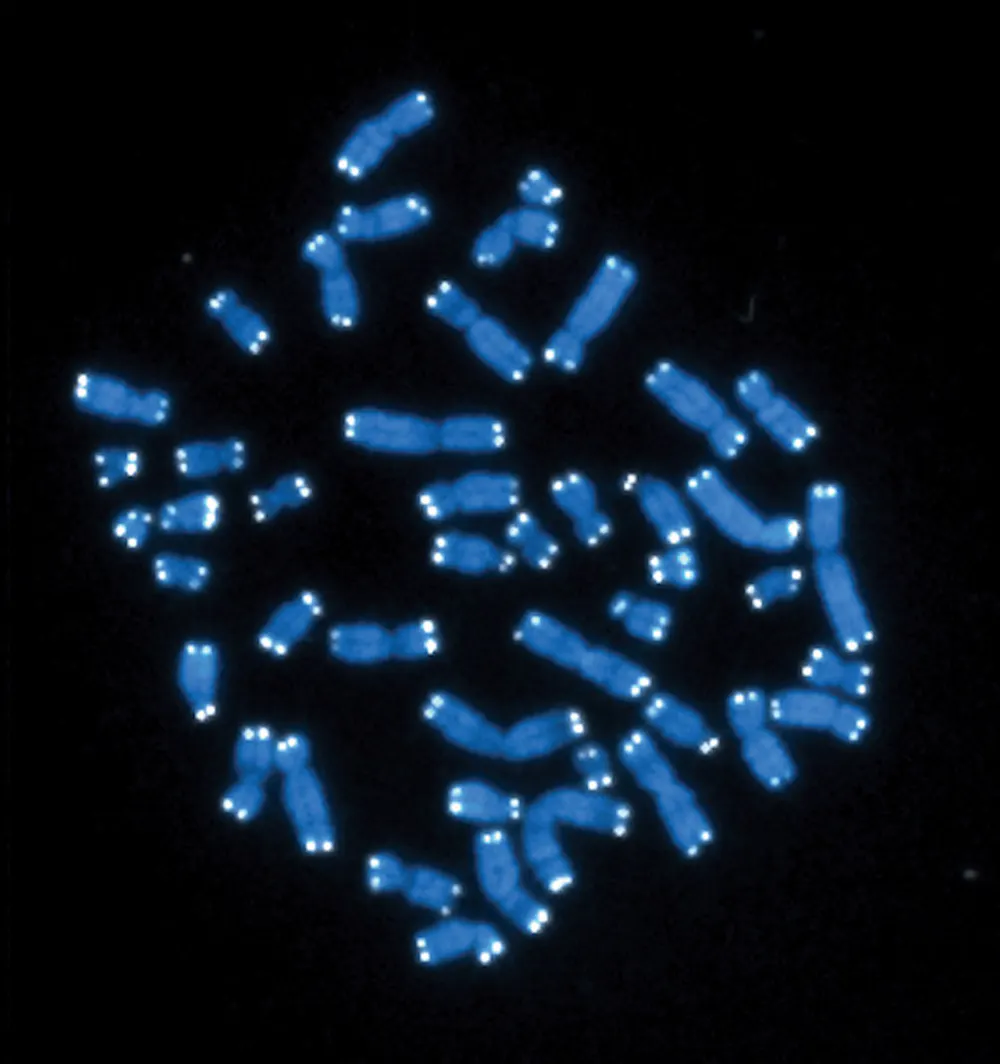
46 human chromosomes colored blue with white telomeres against a black screen
Satellite DNA tends to cluster toward the ends of chromosomes in their telomeres. Here, 46 human chromosomes are colored blue, with white telomeres.
NIH Image Gallery/flickr, CC BY-NC

Another abundant type of repetitive DNA are transposable elements, or sequences that can move around the genome.

Some scientists have described them as selfish DNA because they can insert themselves anywhere in the genome, regardless of the consequences. As the human genome evolved, many transposable sequences collected mutations repressing their ability to move to avoid harmful interruptions. But some can likely still move about. For example, transposable element insertions are linked to a number of cases of hemophilia A, a genetic bleeding disorder.

Transposable DNA may be the reason why humans have a tailbone but no tail.

But transposable elements aren’t just disruptive. They can have regulatory functions that help control the expression of other DNA sequences. When they’re concentrated in centromeres, they may also help maintain the integrity of the genes fundamental to cell survival.

They can also contribute to evolution. Researchers recently found that the insertion of a transposable element into a gene important to development might be why some primates, including humans, no longer have tails. Chromosome rearrangements due to transposable elements are even linked to the genesis of new species like the gibbons of southeast Asia and the wallabies of Australia.

Completing the genomic puzzle

Until recently, many of these complex regions could be compared to the far side of the moon: known to exist, but unseen.

When the Human Genome Project first launched in 1990, technological limitations made it impossible to fully uncover repetitive regions in the genome. Available sequencing technology could only read about 500 nucleotides at a time, and these short fragments had to overlap one another in order to recreate the full sequence. Researchers used these overlapping segments to identify the next nucleotides in the sequence, incrementally extending the genome assembly one fragment at a time.

These repetitive gap regions were like putting together a 1,000-piece puzzle of an overcast sky: When every piece looks the same, how do you know where one cloud starts and another ends? With near-identical overlapping stretches in many spots, fully sequencing the genome by piecemeal became unfeasible. Millions of nucleotides remained hidden in the the first iteration of the human genome.

Since then, sequence patches have gradually filled in gaps of the human genome bit by bit. And in 2021, the Telomere-to-Telomere (T2T) Consortium, an international consortium of scientists working to complete a human genome assembly from end to end, announced that all remaining gaps were finally filled.

With the completion of the first human genome, researchers are now looking toward capturing the full diversity of humanity.

This was made possible by improved sequencing technology capable of reading longer sequences thousands of nucleotides in length. With more information to situate repetitive sequences within a larger picture, it became easier to identify their proper place in the genome. Like simplifying a 1,000-piece puzzle to a 100-piece puzzle, long-read sequences made it possible to assemble large repetitive regions for the first time.

With the increasing power of long-read DNA sequencing technology, geneticists are positioned to explore a new era of genomics, untangling complex repetitive sequences across populations and species for the first time. And a complete, gap-free human genome provides an invaluable resource for researchers to investigate repetitive regions that shape genetic structure and variation, species evolution and human health.

But one complete genome doesn’t capture it all. Efforts continue to create diverse genomic references that fully represent the human population and life on Earth. With more complete, “telomere-to-telomere” genome references, scientists’ understanding of the repetitive dark matter of DNA will become more clear.

[Get fascinating science, health and technology news. Sign up for The Conversation’s weekly science newsletter.]

Gabrielle Hartley, PhD Candidate in Molecular and Cell Biology, University of Connecticut

This article is republished from The Conversation under a Creative Commons license. Read the original article.


ShareTweet
The Conversation

The Conversation

Leave a Reply Cancel reply

Your email address will not be published. Required fields are marked *

Videos

Most employers are unknowingly steering their health plans toward higher costs and reduced control — until they understand how fiduciary missteps and anti-competitive contracts bleed their budgets dry. Katie Talento, a recognized health policy leader, reveals how shifting the network paradigm can save millions by emphasizing independent providers, direct contracting, and innovative tiering models.

Grounded in real-world case studies like Harris Rosen’s community-driven initiative, this episode dives deep into practical strategies to realign incentives—focusing on primary care, specialty care, and transparent vendor relationships. You'll discover how traditional carrier networks are often Trojan horses, locking employers into costly, opaque arrangements that undermine fiduciary duties. Katie breaks down simple yet powerful reforms: owning your data, eliminating conflicts of interest, and outlawing anti-competitive contract clauses.

We explore how a post-network framework—where patients are free to choose providers without restrictive network barriers—can massively reduce costs and improve health outcomes. You'll learn why independent, locally owned providers are vital to rebuilding trust, reducing unnecessary procedures, and reinvesting savings into the community. This conversation offers clarity on the unseen legal landmines employers face and actionable ways to craft health plans built on transparency, independence, and aligned incentives.

Perfect for HR pros, benefits advisors, physicians, and employer leaders committed to transforming healthcare from the ground up. If you’re tired of broken healthcare models draining your budget and frustrating your staff, this episode will empower you to take control by understanding and reshaping the very foundations of employer-sponsored health. Discover the blueprint for smarter, fairer, and more sustainable benefits.

Visit katytalento.com or allbetter.health to connect directly and explore how these innovations can work for your organization. Your path toward a healthier, more cost-effective future starts here.

Chapters

00:00 Introduction to Employer-Sponsored Health Plans
02:50 Understanding ERISA and Fiduciary Responsibilities
06:08 The Misalignment of Clinical and Financial Interests
08:54 Enforcement and Legal Implications for Employers
11:49 Redefining Networks: The Post-Network Framework
25:34 Navigating Healthcare Contracts and Cash Payments
27:31 Understanding Employer Health Plan Structures
28:04 The Role of Benefits Advisors in Health Plans
30:45 Governance and Data Ownership in Health Plans
37:05 Case Study: The Rosen Hotels' Health Model
41:33 Incentivizing Healthy Choices in Healthcare
47:22 Empowering Primary Care and Independent Providers
The Hidden Costs Employers Don’t See in Traditional Health Plans
YouTube Video xhks7YbmBoY
Subscribe

Policy Shift in Peptide Regulation

Clinical Reads

Semaglutide and the Expansion Problem: When One Trial Becomes a Platform

Semaglutide and the Expansion Problem: When One Trial Becomes a Platform

by Daily Remedy
March 30, 2026
0

Semaglutide has moved beyond its original indication and now sits at the center of a widening set of clinical questions: cardiovascular risk, kidney disease progression, and even neurodegeneration. The question is no longer whether the drug lowers glucose or reduces weight—it does—but how far those effects extend across systems, and whether evidence from one population can be translated into another without distortion. Large, well-powered trials have produced consistent signals, yet those signals are now being applied in contexts that were...

Read more

Join Our Newsletter!

Twitter Updates

Tweets by TheDailyRemedy

Popular

  • PT Water Therapy

    PT Water Therapy

    1 shares
    Share 0 Tweet 0
  • California Likely Fined $40M for Lapses in Prison Suicide Prevention

    0 shares
    Share 0 Tweet 0
  • Earnings Calls, Appetite Signals, and the Future of Benefits

    0 shares
    Share 0 Tweet 0
  • Medicaid Enrollment Soared by 25% During the COVID-19 Pandemic

    0 shares
    Share 0 Tweet 0
  • Gaming Therapy

    0 shares
    Share 0 Tweet 0
  • 628 Followers

Daily Remedy

Daily Remedy offers the best in healthcare information and healthcare editorial content. We take pride in consistently delivering only the highest quality of insight and analysis to ensure our audience is well-informed about current healthcare topics - beyond the traditional headlines.

Daily Remedy website services, content, and products are for informational purposes only. We do not provide medical advice, diagnosis, or treatment. All rights reserved.

Important Links

  • Support Us
  • About Us
  • Contact us
  • Privacy Policy
  • Terms and Conditions

Join Our Newsletter!

  • Survey
  • Podcast
  • About Us
  • Contact us

© 2026 Daily Remedy

No Result
View All Result
  • Home
  • Articles
  • Podcasts
  • Surveys
  • Courses
  • About Us
  • Contact us
  • Support Us
  • Official Learner

© 2026 Daily Remedy
