












Sunday, February 15, 2026
ISSN 2765-8767
  • Survey
  • Podcast
  • Write for Us
  • My Account
  • Log In
Daily Remedy
  • Home
  • Articles
  • Podcasts
    The Future of LLMs in Healthcare

    The Future of LLMs in Healthcare

    January 26, 2026
    The Future of Healthcare Consumerism

    The Future of Healthcare Consumerism

    January 22, 2026
    Your Body, Your Health Care: A Conversation with Dr. Jeffrey Singer

    Your Body, Your Health Care: A Conversation with Dr. Jeffrey Singer

    July 1, 2025

    The cost structure of hospitals nearly doubles

    July 1, 2025
    Navigating the Medical Licensing Maze

    The Fight Against Healthcare Fraud: Dr. Rafai’s Story

    April 8, 2025
    Navigating the Medical Licensing Maze

    Navigating the Medical Licensing Maze

    April 4, 2025
  • Surveys

    Surveys

    AI in Healthcare Decision-Making

    AI in Healthcare Decision-Making

    February 1, 2026
    Patient Survey: Understanding Healthcare Consumerism

    Patient Survey: Understanding Healthcare Consumerism

    January 18, 2026

    Survey Results

    Can you tell when your provider does not trust you?

    Can you tell when your provider does not trust you?

    January 18, 2026
    Do you believe national polls on health issues are accurate

    National health polls: trust in healthcare system accuracy?

    May 8, 2024
    Which health policy issues matter the most to Republican voters in the primaries?

    Which health policy issues matter the most to Republican voters in the primaries?

    May 14, 2024
    How strongly do you believe that you can tell when your provider does not trust you?

    How strongly do you believe that you can tell when your provider does not trust you?

    May 7, 2024
  • Courses
  • About Us
  • Contact us
  • Support Us
  • Official Learner
No Result
View All Result
  • Home
  • Articles
  • Podcasts
    The Future of LLMs in Healthcare

    The Future of LLMs in Healthcare

    January 26, 2026
    The Future of Healthcare Consumerism

    The Future of Healthcare Consumerism

    January 22, 2026
    Your Body, Your Health Care: A Conversation with Dr. Jeffrey Singer

    Your Body, Your Health Care: A Conversation with Dr. Jeffrey Singer

    July 1, 2025

    The cost structure of hospitals nearly doubles

    July 1, 2025
    Navigating the Medical Licensing Maze

    The Fight Against Healthcare Fraud: Dr. Rafai’s Story

    April 8, 2025
    Navigating the Medical Licensing Maze

    Navigating the Medical Licensing Maze

    April 4, 2025
  • Surveys

    Surveys

    AI in Healthcare Decision-Making

    AI in Healthcare Decision-Making

    February 1, 2026
    Patient Survey: Understanding Healthcare Consumerism

    Patient Survey: Understanding Healthcare Consumerism

    January 18, 2026

    Survey Results

    Can you tell when your provider does not trust you?

    Can you tell when your provider does not trust you?

    January 18, 2026
    Do you believe national polls on health issues are accurate

    National health polls: trust in healthcare system accuracy?

    May 8, 2024
    Which health policy issues matter the most to Republican voters in the primaries?

    Which health policy issues matter the most to Republican voters in the primaries?

    May 14, 2024
    How strongly do you believe that you can tell when your provider does not trust you?

    How strongly do you believe that you can tell when your provider does not trust you?

    May 7, 2024
  • Courses
  • About Us
  • Contact us
  • Support Us
  • Official Learner
No Result
View All Result
Daily Remedy
No Result
View All Result
Home Uncertainty & Complexity

Predicting COVID-19’s Fall Upswing

Daily Remedy by Daily Remedy
August 8, 2021
in Uncertainty & Complexity
0

To predict the future, focus on what you don’t know, rather than what you do know – prioritize the uncertainty.

A conceptual framework proving surprisingly accurate, at least when it comes to the pandemic, after all we have policy makers who decry the need for masks because – according to them – mask-wearing may deter vaccinations. A counterintuitive logical exercise which assumes patient behavior follows some variation of the law of unintended consequences.

So – following their logic – when we enact healthcare policy, we should assume patients will respond to the uncertainty within the policy. Maybe they’re right. It then follows that to predict patient behavior, we should focus on the uncertainty.

Easier said than done – how often do we think or consciously make decisions like that?

We decide based upon what we think we know, whether that is all to know or not.

Our knowledge is flawed, therefore our predictions are flawed just as well.

When we hear multiple predictive models anticipating an upswing in COVID-19 mortality this Fall – 3x mortality to be specific – what do we make of that information?

We know these models have been off before, and everything around us seems to imply the pandemic is in the past. But what if we’re wrong?

What if the pandemic is simply in a lull, transitioning from one phase to another, and what we perceive to be the end is simply the interlude?

We just don’t know, and while we can sing sweet rhetoricals until our throats sore, we still will never know with any certainty.

Maybe that’s the point – and the policy-makers are on to something. Maybe instead of trying to predict what will happen, we should focus on what we don’t know, and try to navigate the most likely outcome based upon how uncertain we are.

Thinking like this quickly becomes abstract, and it may help to think figuratively.

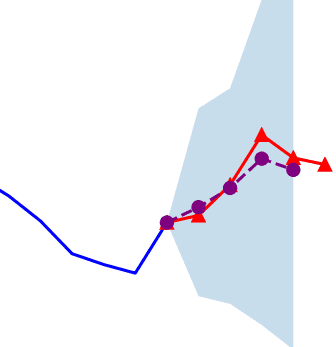
Uncertainty is like a slope, with different gradients – some sharper than others – and the sharper the slope, the greater the uncertainty.

Some uncertainty is more uncertain, coming at a greater gradient, while other forms of uncertainty are less uncertain, and with lesser gradient.

Typically the future follows the path of least resistance, trending towards an uncertainty with a lesser gradient. So to predict the future, just gauge what you are least unsure of, as that is the likely course of action.

To predict the future of the pandemic this fall, ask – what are we least unsure of?

We know people are fed up with the pandemic, and generally unwilling to adhere to social distancing and mask-wearing protocol.

We know vaccinations have hit a wall, with a clear divide forming between those who have received the vaccine and those who are not willing to receive it.

And we know the virus continues to spread. Whether it is the delta variant, or another downstream Greek letter affiliate, the virus is mutating and continues to spread.

Of the three factors cited, the first two are relatively predictable. We can generally anticipate how people will behave regardless of how COVID-19 progresses, because we are confident that certain past behavior will mimic future actions.

What we are most unsure of is the virality of the variants. The available data suggests the virus is more infectious, spreads more easily, but the severity of the disease seems to be tempered a bit – at least among the vaccinated, not the unvaccinated.

This distinction may appear obvious, but is most critical.

Remember, even at the peak of the pandemic’s first and second wave, the most devastating impact of the virus was the sheer burden it placed on the healthcare system. Social distancing measures were enacted largely to distribute the burden over time, giving healthcare providers and hospitals much needed space and time to address each individual infected.

Since the total number of unvaccinated patients is less than the entire population, it would appear that even if the virus spreads at a faster rate, the disease burden may be less than what it was at its peak.

Yet this the crucible upon which all COVID-19 predictions hinge.

There will come a point, either at the end of October or the beginning of November, in which virus-related mortality will spike. How quickly and how severe that upswing forms will determine how well the healthcare system can manage it.

If this prospective peak is less than the overall capacity, then the healthcare system can withstand a Fall surge. If it is greater, then we will start to see shades of what we saw in early 2020 – lockdowns and all – not exactly the same, but similar.

How similar?

Well that’s what we are uncertain about. But at least we know what hangs in the balance.

At least we know what we are uncertain about.

ShareTweet
Daily Remedy

Daily Remedy

Dr. Jay K Joshi serves as the editor-in-chief of Daily Remedy. He is a serial entrepreneur and sought after thought-leader for matters related to healthcare innovation and medical jurisprudence. He has published articles on a variety of healthcare topics in both peer-reviewed journals and trade publications. His legal writings include amicus curiae briefs prepared for prominent federal healthcare cases.

Leave a Reply Cancel reply

Your email address will not be published. Required fields are marked *

Videos

In this episode, the host discusses the significance of large language models (LLMs) in healthcare, their applications, and the challenges they face. The conversation highlights the importance of simplicity in model design and the necessity of integrating patient feedback to enhance the effectiveness of LLMs in clinical settings.

Takeaways
LLMs are becoming integral in healthcare.
They can help determine costs and service options.
Hallucination in LLMs can lead to misinformation.
LLMs can produce inconsistent answers based on input.
Simplicity in LLMs is often more effective than complexity.
Patient behavior should guide LLM development.
Integrating patient feedback is crucial for accuracy.
Pre-training models with patient input enhances relevance.
Healthcare providers must understand LLM limitations.
The best LLMs will focus on patient-centered care.

Chapters

00:00 Introduction to LLMs in Healthcare
05:16 The Importance of Simplicity in LLMs
The Future of LLMs in HealthcareDaily Remedy
YouTube Video U1u-IYdpeEk
Subscribe

AI Regulation and Deployment Is Now a Core Healthcare Issue

Clinical Reads

Ambient Artificial Intelligence Clinical Documentation: Workflow Support with Emerging Governance Risk

Ambient Artificial Intelligence Clinical Documentation: Workflow Support with Emerging Governance Risk

by Daily Remedy
February 1, 2026
0

Health systems are increasingly deploying ambient artificial intelligence tools that listen to clinical encounters and automatically generate draft visit notes. These systems are intended to reduce documentation burden and allow clinicians to focus more directly on patient interaction. At the same time, they raise unresolved questions about patient consent, data handling, factual accuracy, and legal responsibility for machine‑generated records. Recent policy discussions and legal actions suggest that adoption is moving faster than formal oversight frameworks. The practical clinical question is...

Read more

Join Our Newsletter!

Twitter Updates

Tweets by TheDailyRemedy

Popular

  • The Information Epidemic: How Digital Health Misinformation Is Rewiring Clinical Risk

    The Information Epidemic: How Digital Health Misinformation Is Rewiring Clinical Risk

    0 shares
    Share 0 Tweet 0
  • Prevention Is Having a Moment and a Measurement Problem

    0 shares
    Share 0 Tweet 0
  • Child Health Is Now a Platform Issue

    0 shares
    Share 0 Tweet 0
  • Behavioral Health Is Now a Network Phenomenon

    0 shares
    Share 0 Tweet 0
  • The Breach Is the Diagnosis: Cybersecurity Has Become a Clinical Risk Variable

    0 shares
    Share 0 Tweet 0
  • 628 Followers

Daily Remedy

Daily Remedy offers the best in healthcare information and healthcare editorial content. We take pride in consistently delivering only the highest quality of insight and analysis to ensure our audience is well-informed about current healthcare topics - beyond the traditional headlines.

Daily Remedy website services, content, and products are for informational purposes only. We do not provide medical advice, diagnosis, or treatment. All rights reserved.

Important Links

  • Support Us
  • About Us
  • Contact us
  • Privacy Policy
  • Terms and Conditions

Join Our Newsletter!

  • Survey
  • Podcast
  • About Us
  • Contact us

© 2026 Daily Remedy

No Result
View All Result
  • Home
  • Articles
  • Podcasts
  • Surveys
  • Courses
  • About Us
  • Contact us
  • Support Us
  • Official Learner

© 2026 Daily Remedy
