













Saturday, February 14, 2026
ISSN 2765-8767
  • Survey
  • Podcast
  • Write for Us
  • My Account
  • Log In
Daily Remedy
  • Home
  • Articles
  • Podcasts
    The Future of LLMs in Healthcare

    The Future of LLMs in Healthcare

    January 26, 2026
    The Future of Healthcare Consumerism

    The Future of Healthcare Consumerism

    January 22, 2026
    Your Body, Your Health Care: A Conversation with Dr. Jeffrey Singer

    Your Body, Your Health Care: A Conversation with Dr. Jeffrey Singer

    July 1, 2025

    The cost structure of hospitals nearly doubles

    July 1, 2025
    Navigating the Medical Licensing Maze

    The Fight Against Healthcare Fraud: Dr. Rafai’s Story

    April 8, 2025
    Navigating the Medical Licensing Maze

    Navigating the Medical Licensing Maze

    April 4, 2025
  • Surveys

    Surveys

    AI in Healthcare Decision-Making

    AI in Healthcare Decision-Making

    February 1, 2026
    Patient Survey: Understanding Healthcare Consumerism

    Patient Survey: Understanding Healthcare Consumerism

    January 18, 2026

    Survey Results

    Can you tell when your provider does not trust you?

    Can you tell when your provider does not trust you?

    January 18, 2026
    Do you believe national polls on health issues are accurate

    National health polls: trust in healthcare system accuracy?

    May 8, 2024
    Which health policy issues matter the most to Republican voters in the primaries?

    Which health policy issues matter the most to Republican voters in the primaries?

    May 14, 2024
    How strongly do you believe that you can tell when your provider does not trust you?

    How strongly do you believe that you can tell when your provider does not trust you?

    May 7, 2024
  • Courses
  • About Us
  • Contact us
  • Support Us
  • Official Learner
No Result
View All Result
  • Home
  • Articles
  • Podcasts
    The Future of LLMs in Healthcare

    The Future of LLMs in Healthcare

    January 26, 2026
    The Future of Healthcare Consumerism

    The Future of Healthcare Consumerism

    January 22, 2026
    Your Body, Your Health Care: A Conversation with Dr. Jeffrey Singer

    Your Body, Your Health Care: A Conversation with Dr. Jeffrey Singer

    July 1, 2025

    The cost structure of hospitals nearly doubles

    July 1, 2025
    Navigating the Medical Licensing Maze

    The Fight Against Healthcare Fraud: Dr. Rafai’s Story

    April 8, 2025
    Navigating the Medical Licensing Maze

    Navigating the Medical Licensing Maze

    April 4, 2025
  • Surveys

    Surveys

    AI in Healthcare Decision-Making

    AI in Healthcare Decision-Making

    February 1, 2026
    Patient Survey: Understanding Healthcare Consumerism

    Patient Survey: Understanding Healthcare Consumerism

    January 18, 2026

    Survey Results

    Can you tell when your provider does not trust you?

    Can you tell when your provider does not trust you?

    January 18, 2026
    Do you believe national polls on health issues are accurate

    National health polls: trust in healthcare system accuracy?

    May 8, 2024
    Which health policy issues matter the most to Republican voters in the primaries?

    Which health policy issues matter the most to Republican voters in the primaries?

    May 14, 2024
    How strongly do you believe that you can tell when your provider does not trust you?

    How strongly do you believe that you can tell when your provider does not trust you?

    May 7, 2024
  • Courses
  • About Us
  • Contact us
  • Support Us
  • Official Learner
No Result
View All Result
Daily Remedy
No Result
View All Result
Home Perspectives

4 Common Disinfectants Used in Cleanrooms

Learn about common disinfectants used in cleanrooms. Discover how isopropyl alcohol, bleach, hydrogen peroxide, and quats provide safe contamination control.

Casey Cartwright by Casey Cartwright
March 9, 2025
in Perspectives
0
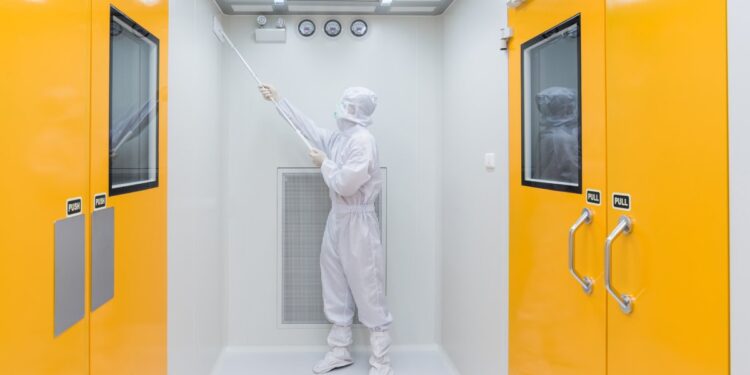
An individual wearing a white sterile gown and gloves is using a cleaning tool to scrub a white wall.

Cleanrooms are environments that demand strict control of contamination to ensure the safety and quality of sensitive processes, such as pharmaceutical production or scientific research. The use of specialized disinfectants plays a critical role in maintaining these standards by eliminating harmful microorganisms effectively. Below, we’ll discuss four common disinfectants used in cleanrooms, highlighting their properties, applications, and precautions.

Isopropyl Alcohol (IPA)

Isopropyl alcohol (IPA) is a widely used disinfectant in cleanrooms due to its fast-acting and broad-spectrum antimicrobial properties. Typically found at concentrations of 70 percent with water, IPA is effective at killing bacteria, fungi, and certain viruses by breaking down cell walls and proteins. Beyond its effectiveness, it evaporates quickly without leaving residues, making it ideal for cleanroom surfaces and equipment. However, it is flammable, and you must carefully store and apply it properly in well-ventilated areas to avoid potential hazards.

Bleach (Sodium Hypochlorite)

Bleach, or sodium hypochlorite, offers strong disinfecting capabilities, particularly against a wide range of bacteria, viruses, and spores. Workers often dilute it to ensure safe handling while maintaining potency, with recommended concentrations varying based on the intended application. Despite its effectiveness, bleach comes with challenges, including its corrosive properties, which can damage certain surfaces over time. Users should wear appropriate gloves and goggles to protect themselves from harmful fumes or accidental skin contact. Proper ventilation is paramount when using bleach in cleanroom settings.

Hydrogen Peroxide

Hydrogen peroxide is another common disinfectant used in cleanrooms due to its ability to oxidize and destroy microbial cells. It’s highly effective against bacteria, fungi, and viruses, and its vaporized form is particularly useful for disinfecting large areas or equipment without introducing moisture. A major advantage of hydrogen peroxide is its eco-friendliness; it breaks down into oxygen and water, leaving no toxic residues. Nevertheless, improper handling can lead to irritation of the skin, eyes, or respiratory system, making personal protective equipment essential during use.

Quaternary Ammonium Compounds (Quats)

Quats offer flexibility in cleanroom applications, thanks to their residual activity that continues to inhibit microbial growth after initial application. This makes them effective for maintaining surfaces over time. However, excessive residue buildup can sometimes interfere with sensitive equipment or testing processes. Quats are common for use on non-critical surfaces or in combination with other disinfectants to enhance efficiency. Ensuring proper rinsing or wiping can mitigate residue concerns.

Maintaining cleanrooms demands a balance between effectiveness and safety when choosing disinfectants. Each disinfectant has its role in ensuring cleanroom hygiene, and the choice often depends on the specific needs of the environment. Consistent disinfectant validation in cleanrooms safeguards critical processes, ensuring contamination-free operations.


ShareTweet
Casey Cartwright

Casey Cartwright

Casey is a passionate copyeditor highly motivated to provide compelling SEO content in the digital marketing space. Her expertise includes a vast range of industries from highly technical, consumer, and lifestyle-based, with an emphasis on attention to detail and readability.

Leave a Reply Cancel reply

Your email address will not be published. Required fields are marked *

Videos

In this episode, the host discusses the significance of large language models (LLMs) in healthcare, their applications, and the challenges they face. The conversation highlights the importance of simplicity in model design and the necessity of integrating patient feedback to enhance the effectiveness of LLMs in clinical settings.

Takeaways
LLMs are becoming integral in healthcare.
They can help determine costs and service options.
Hallucination in LLMs can lead to misinformation.
LLMs can produce inconsistent answers based on input.
Simplicity in LLMs is often more effective than complexity.
Patient behavior should guide LLM development.
Integrating patient feedback is crucial for accuracy.
Pre-training models with patient input enhances relevance.
Healthcare providers must understand LLM limitations.
The best LLMs will focus on patient-centered care.

Chapters

00:00 Introduction to LLMs in Healthcare
05:16 The Importance of Simplicity in LLMs
The Future of LLMs in HealthcareDaily Remedy
YouTube Video U1u-IYdpeEk
Subscribe

AI Regulation and Deployment Is Now a Core Healthcare Issue

Clinical Reads

Ambient Artificial Intelligence Clinical Documentation: Workflow Support with Emerging Governance Risk

Ambient Artificial Intelligence Clinical Documentation: Workflow Support with Emerging Governance Risk

by Daily Remedy
February 1, 2026
0

Health systems are increasingly deploying ambient artificial intelligence tools that listen to clinical encounters and automatically generate draft visit notes. These systems are intended to reduce documentation burden and allow clinicians to focus more directly on patient interaction. At the same time, they raise unresolved questions about patient consent, data handling, factual accuracy, and legal responsibility for machine‑generated records. Recent policy discussions and legal actions suggest that adoption is moving faster than formal oversight frameworks. The practical clinical question is...

Read more

Join Our Newsletter!

Twitter Updates

Tweets by TheDailyRemedy

Popular

  • The Information Epidemic: How Digital Health Misinformation Is Rewiring Clinical Risk

    The Information Epidemic: How Digital Health Misinformation Is Rewiring Clinical Risk

    0 shares
    Share 0 Tweet 0
  • Prevention Is Having a Moment and a Measurement Problem

    0 shares
    Share 0 Tweet 0
  • Health Technology Assessment Is Moving Upstream

    0 shares
    Share 0 Tweet 0
  • Behavioral Health Is Now a Network Phenomenon

    0 shares
    Share 0 Tweet 0
  • The Breach Is the Diagnosis: Cybersecurity Has Become a Clinical Risk Variable

    0 shares
    Share 0 Tweet 0
  • 628 Followers

Daily Remedy

Daily Remedy offers the best in healthcare information and healthcare editorial content. We take pride in consistently delivering only the highest quality of insight and analysis to ensure our audience is well-informed about current healthcare topics - beyond the traditional headlines.

Daily Remedy website services, content, and products are for informational purposes only. We do not provide medical advice, diagnosis, or treatment. All rights reserved.

Important Links

  • Support Us
  • About Us
  • Contact us
  • Privacy Policy
  • Terms and Conditions

Join Our Newsletter!

  • Survey
  • Podcast
  • About Us
  • Contact us

© 2026 Daily Remedy

No Result
View All Result
  • Home
  • Articles
  • Podcasts
  • Surveys
  • Courses
  • About Us
  • Contact us
  • Support Us
  • Official Learner

© 2026 Daily Remedy