













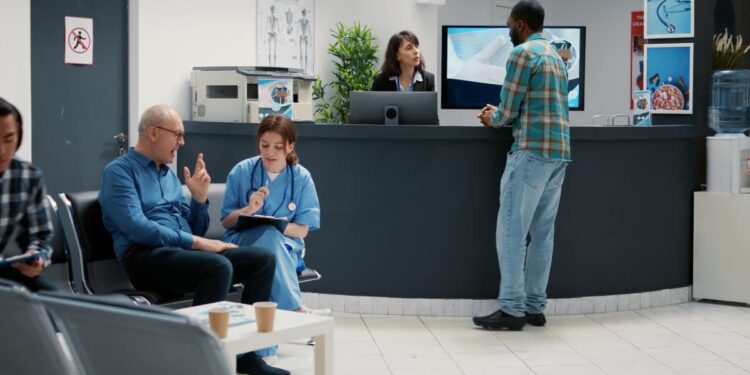
Infection prevention is typically framed in terms of clinical protocols, such as hand hygiene and the use of personal protective equipment. Healthcare organizations often pay less attention to how the physical environment supports or complicates those efforts. Yet guidance from the CDC continues to emphasize the role of environmental surfaces in the transmission of pathogens, particularly in high-touch areas within patient care settings.
For healthcare professionals, environmental cleaning in healthcare extends beyond routine housekeeping. It also reflects why high-touch healthcare surfaces need smarter design, especially when design decisions shape how consistently teams can clean and disinfect them over time.
Why the Built Environment Affects Infection Prevention
Surfaces encountered frequently by staff and patients require regular disinfection due to repeated contact. CDC environmental infection control guidance classifies these high-touch surfaces as higher risk and includes them in structured cleaning protocols.
Even with strong policies in place, a surface’s physical characteristics can still influence outcomes. Components with tight seams, complex joints, or inaccessible areas may be more difficult to clean thoroughly. Over time, these challenges can introduce variability into otherwise standardized processes.
This is where collaboration between infection prevention teams and facility planners becomes valuable. Material selection, surface finish, and accessibility all contribute to whether a component supports or complicates cleaning expectations.
Rail Systems and Surface Hygiene
Rail systems appear across healthcare settings in ways staff and patients interact with every day, which puts them into the broader conversation about surface hygiene and infection control. In practice, healthcare teams maintain rail systems more easily when designers account for routine cleaning and germ control from the start, rather than adapting systems after installation.
This is where design becomes practical rather than cosmetic. A rail system with a cleaner surface profile can make routine maintenance more manageable for healthcare teams and better support the cleaning standards already in place.
Design Choices Can Support Cleaning Protocols
Healthcare environments operate within tightly defined infection prevention frameworks. Cleaning schedules, disinfectant selection, and staff training all play essential roles. However, these systems are most effective when the built environment aligns with them.
Revisiting hardware and fixture design through the lens of cleanability can help reduce friction in daily operations. For organizations planning renovations or evaluating existing spaces, integrating smarter designs for high-touch healthcare surfaces early in the process can improve long-term consistency in infection control practices.



