












Friday, January 30, 2026
ISSN 2765-8767
  • Survey
  • Podcast
  • Write for Us
  • My Account
  • Log In
Daily Remedy
  • Home
  • Articles
  • Podcasts
    The Future of LLMs in Healthcare

    The Future of LLMs in Healthcare

    January 26, 2026
    The Future of Healthcare Consumerism

    The Future of Healthcare Consumerism

    January 22, 2026
    Your Body, Your Health Care: A Conversation with Dr. Jeffrey Singer

    Your Body, Your Health Care: A Conversation with Dr. Jeffrey Singer

    July 1, 2025

    The cost structure of hospitals nearly doubles

    July 1, 2025
    Navigating the Medical Licensing Maze

    The Fight Against Healthcare Fraud: Dr. Rafai’s Story

    April 8, 2025
    Navigating the Medical Licensing Maze

    Navigating the Medical Licensing Maze

    April 4, 2025
  • Surveys

    Surveys

    Patient Survey: Understanding Healthcare Consumerism

    Patient Survey: Understanding Healthcare Consumerism

    January 18, 2026
    Public Confidence in Proposed Changes to U.S. Vaccine Policy

    Public Confidence in Proposed Changes to U.S. Vaccine Policy

    January 3, 2026

    Survey Results

    Can you tell when your provider does not trust you?

    Can you tell when your provider does not trust you?

    January 18, 2026
    Do you believe national polls on health issues are accurate

    National health polls: trust in healthcare system accuracy?

    May 8, 2024
    Which health policy issues matter the most to Republican voters in the primaries?

    Which health policy issues matter the most to Republican voters in the primaries?

    May 14, 2024
    How strongly do you believe that you can tell when your provider does not trust you?

    How strongly do you believe that you can tell when your provider does not trust you?

    May 7, 2024
  • Courses
  • About Us
  • Contact us
  • Support Us
  • Official Learner
No Result
View All Result
  • Home
  • Articles
  • Podcasts
    The Future of LLMs in Healthcare

    The Future of LLMs in Healthcare

    January 26, 2026
    The Future of Healthcare Consumerism

    The Future of Healthcare Consumerism

    January 22, 2026
    Your Body, Your Health Care: A Conversation with Dr. Jeffrey Singer

    Your Body, Your Health Care: A Conversation with Dr. Jeffrey Singer

    July 1, 2025

    The cost structure of hospitals nearly doubles

    July 1, 2025
    Navigating the Medical Licensing Maze

    The Fight Against Healthcare Fraud: Dr. Rafai’s Story

    April 8, 2025
    Navigating the Medical Licensing Maze

    Navigating the Medical Licensing Maze

    April 4, 2025
  • Surveys

    Surveys

    Patient Survey: Understanding Healthcare Consumerism

    Patient Survey: Understanding Healthcare Consumerism

    January 18, 2026
    Public Confidence in Proposed Changes to U.S. Vaccine Policy

    Public Confidence in Proposed Changes to U.S. Vaccine Policy

    January 3, 2026

    Survey Results

    Can you tell when your provider does not trust you?

    Can you tell when your provider does not trust you?

    January 18, 2026
    Do you believe national polls on health issues are accurate

    National health polls: trust in healthcare system accuracy?

    May 8, 2024
    Which health policy issues matter the most to Republican voters in the primaries?

    Which health policy issues matter the most to Republican voters in the primaries?

    May 14, 2024
    How strongly do you believe that you can tell when your provider does not trust you?

    How strongly do you believe that you can tell when your provider does not trust you?

    May 7, 2024
  • Courses
  • About Us
  • Contact us
  • Support Us
  • Official Learner
No Result
View All Result
Daily Remedy
No Result
View All Result
Home Politics & Law

Healthcare Is A (Positive) Right

Daily Remedy by Daily Remedy
August 8, 2021
in Politics & Law
0

The physicians who form the pantheon of medicine all emphasized an experienced based approach to healthcare. Whether it was Hippocrates characterizing medicine as an art to be practiced. Or reminding that medicine does not consist of treating a disease but healing a person. Medicine has always been defined through experience.

Famed Roman surgeon Galen began his medical career as a surgeon treating dying gladiators, and soon grew renowned for his experimental approach to medicine, eventually serving as the private physician for the Roman Caesars, including Marcus Aurelius.

A career trajectory emulated centuries later by Maimonides, a Sephardic Jew who became the personal physician for the legendary Muslim Crusader, Saladin. Maimonides also took an experimental approach to medicine, but added the importance of civic responsibility as well.

A combination that would inspire Canadian physician Sr. William Osler’s humanistic approach to medicine at the turn of the twentieth century. Dr. Osler, who is best known for managing outpatient facilities at John Hopkins Medical Center, and turning the institution into a research juggernaut, also designed a clinical curriculum that became the model for modern medical education in the United States. He emphasized the clinic as much as the textbook, believing direct patient contact to be the bedrock of good medicine. An emphasis built upon his humanistic approach to healthcare.

When we look at medicine through its humanistic origins, we begin to understand how healthcare laws should form, and better understand the balance between healthcare and law.

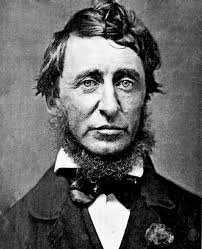
An understanding elaborated upon by essayist Ralph Waldo Emerson and naturalist Henry David Thoreau through their analysis of nature and law. The humanistic principles the two espoused through essays and lectures provide a conceptual framework for the role of law in healthcare.

Thoreau emphasized overall moral behavior, more than any individual civic action, as a person’s civic duty to society, equating individual duty with virtue, or what we earlier called aspirational belief. Thoreau’s views on civic duty stems from his perspective on natural rights, which he held sacred above all, including above government intervention. Something Thoreau famously encouraged opposition towards if the intervention violated a person’s natural rights. Advocating that individuals whose natural rights were compromised inappropriately should serve as a, “counter-friction to a fundamental immorality”.

He believed that laws should be in balance with natural rights, and the validity of laws should be measured based upon the law’s morality. A rubric he would use to determine whether to follow a law or not. Thoreau actively encouraged civil disobedience against laws that unnaturally restrict behavior and infringed upon an individual’s healthcare natural rights, valuing such disobedience as a form of virtue.

Civil disobedience transgressing upon natural rights is easy to define for obviously unethical laws, such as slavery. But the concept of natural rights becomes more convoluted for more complex healthcare laws.

Natural rights are universal and unalienable, and codified in the Declaration of Independence: life, liberty and the pursuit of Happiness. But many have debated how healthcare fits into the definition of natural rights. According to Swiss moralist Henri-Frédéric Amiel, “in health there is freedom – health is the first of all liberties.” Implying that healthcare is a natural right on par with the other basic rights we enjoy. A sentiment most would generally agree upon.

What most do not agree upon, however, is what type of natural right. Legal philosophers tend to describe rights in many ways, but the most common way people introduce the theory of rights is by classifying them as either negative or positive.

A negative right is a right not to be subjected to an action of another person or group; negative rights permit or oblige inaction. A positive right is a right to be subjected to an action or another person or group; positive rights permit or oblige action.

In a way negative rights and positive rights are incompatible. Negative rights limit or abstain actions, while positive rights obligate one person’s actions to another.

American culture values negative rights. Our innate desire for liberty has an undeniable streak of rebellion built into it. We truly value our freedom. But we cannot uphold the Constitutional principles of equity and fairness in healthcare and create healthcare laws based upon negative rights. This is how we get healthcare laws that are restrictive in nature.

Healthcare needs laws based upon positive rights. Laws that are structured to balance the many complex relationships inherent to healthcare behavior, obligating individuals to work together to improve their health.

But attempting to develop healthcare laws based upon positive rights in a culture that values negative rights creates a Maimonidean contradiction that can only be solved by integrating a deeper understanding of healthcare behavior into healthcare law, and by developing laws that better represent the dynamic nature of patient behavior.


ShareTweet
Daily Remedy

Daily Remedy

Dr. Jay K Joshi serves as the editor-in-chief of Daily Remedy. He is a serial entrepreneur and sought after thought-leader for matters related to healthcare innovation and medical jurisprudence. He has published articles on a variety of healthcare topics in both peer-reviewed journals and trade publications. His legal writings include amicus curiae briefs prepared for prominent federal healthcare cases.

Leave a Reply Cancel reply

Your email address will not be published. Required fields are marked *

Videos

In this episode, the host discusses the significance of large language models (LLMs) in healthcare, their applications, and the challenges they face. The conversation highlights the importance of simplicity in model design and the necessity of integrating patient feedback to enhance the effectiveness of LLMs in clinical settings.

Takeaways
LLMs are becoming integral in healthcare.
They can help determine costs and service options.
Hallucination in LLMs can lead to misinformation.
LLMs can produce inconsistent answers based on input.
Simplicity in LLMs is often more effective than complexity.
Patient behavior should guide LLM development.
Integrating patient feedback is crucial for accuracy.
Pre-training models with patient input enhances relevance.
Healthcare providers must understand LLM limitations.
The best LLMs will focus on patient-centered care.

Chapters

00:00 Introduction to LLMs in Healthcare
05:16 The Importance of Simplicity in LLMs
The Future of LLMs in HealthcareDaily Remedy
YouTube Video U1u-IYdpeEk
Subscribe

Large Language Models in Healthcare

Clinical Reads

What the Most-Cited LLM-in-Medicine Papers Reveal—and What They Miss

What the Most-Cited LLM-in-Medicine Papers Reveal—and What They Miss

by Daily Remedy
January 25, 2026
0

In just over two years, papers on large language models (LLMs) in medicine have accumulated nearly fifteen thousand citations, creating an academic canon that is already shaping funding decisions, regulatory conversations, and clinical experimentation. This study dissects the 100 most-cited LLM-in-medicine papers to show who is driving the field, which applications dominate attention, and where the evidence remains dangerously thin. What emerges is a picture of rapid intellectual consolidation—paired with a widening gap between technical promise and clinical reality. The...

Read more

Twitter Updates

Tweets by DailyRemedy1

Newsletter

Start your Daily Remedy journey

Cultivate your knowledge of current healthcare events and ensure you receive the most accurate, insightful healthcare news and editorials.

*we hate spam as much as you do

Popular

  • GLP-1 Drugs Have Moved Past Weight Loss. Medicine Has Not Fully Caught Up.

    GLP-1 Drugs Have Moved Past Weight Loss. Medicine Has Not Fully Caught Up.

    0 shares
    Share 0 Tweet 0
  • Why Investors Now Care About Patient Experience

    0 shares
    Share 0 Tweet 0
  • The Quiet Revolution in the Exam Room: AI Tools That Change Work, Not Headlines

    0 shares
    Share 0 Tweet 0
  • Semaglutide: Keeps Getting Better

    1 shares
    Share 0 Tweet 0
  • Effective Tips for Cleaning Up Family Sick Messes

    0 shares
    Share 0 Tweet 0
  • 628 Followers

Daily Remedy

Daily Remedy offers the best in healthcare information and healthcare editorial content. We take pride in consistently delivering only the highest quality of insight and analysis to ensure our audience is well-informed about current healthcare topics - beyond the traditional headlines.

Daily Remedy website services, content, and products are for informational purposes only. We do not provide medical advice, diagnosis, or treatment. All rights reserved.

Important Links

  • Support Us
  • About Us
  • Contact us
  • Privacy Policy
  • Terms and Conditions

Newsletter

Start your Daily Remedy journey

Cultivate your knowledge of current healthcare events and ensure you receive the most accurate, insightful healthcare news and editorials.

*we hate spam as much as you do

  • Survey
  • Podcast
  • About Us
  • Contact us

© 2026 Daily Remedy

No Result
View All Result
  • Home
  • Articles
  • Podcasts
  • Surveys
  • Courses
  • About Us
  • Contact us
  • Support Us
  • Official Learner

© 2026 Daily Remedy

Start your Daily Remedy journey

Cultivate your knowledge of current healthcare events and ensure you receive the most accurate, insightful healthcare news and editorials.

*we hate spam as much as you do