













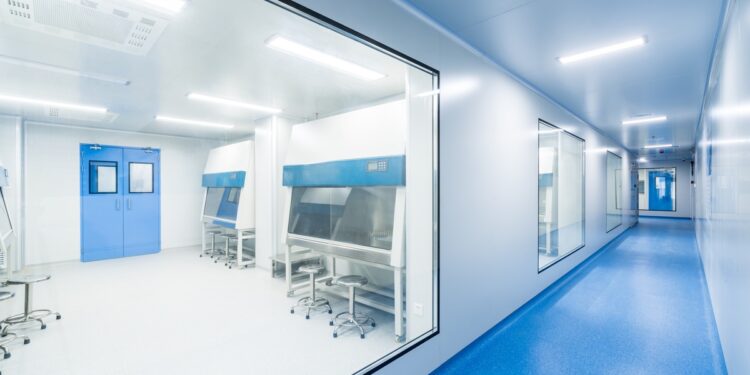
Cleanrooms support some of the most sensitive functions in healthcare. These spaces protect medications, devices, lab work, and patient safety by controlling particles, moisture, and microbial spread.
Sanitation is an extremely important part of maintaining a clean room’s controlled space. The right design reduces dust traps, improves access, and helps staff clean surfaces thoroughly and on schedule. These are some of the design features that make cleanrooms easier to sanitize.
Smooth Surfaces Support Better Cleaning
Surface choice has a direct effect on sanitation. Smooth, nonporous walls, ceilings, and work surfaces allow staff to remove residue quickly and apply disinfectants evenly.
Rough finishes, exposed fasteners, and porous materials create places where particles can collect. Those details slow cleaning and raise the risk of missed contamination.
Seamless Transitions Reduce Risk
Floor-to-wall transitions deserve close attention in any healthcare cleanroom. Coved connections replace hard corners with smooth curves, which makes daily wiping and mopping more effective.
Seams also need control across the room. Tight, sealed joints limit buildup and help preserve a consistent sanitary surface over time.
Flush Features Make Sanitation Easier
Flush-mounted doors, windows, lighting, and utility connections improve cleanability. These features remove ledges and recessed edges where dust and microbes can settle.
Cleanrooms work best when surfaces stay as continuous as possible. Staff can then move through routine sanitation with fewer interruptions and better coverage.
Layout Shapes Daily Hygiene
Room layout affects how people move, where supplies stop, and how clean and dirty activities stay separated. A strong layout reduces unnecessary traffic and helps teams clean without working around poorly placed equipment.
Clear access around workstations, carts, and storage areas also matters. Tight gaps behind equipment often become neglected zones that collect dirt and residue.
Design Details That Matter Most
Some design features provide clear sanitation benefits in healthcare environments:
- Coved floor bases that remove sharp corners
- Flush-mounted fixtures and glazing
- Nonporous wall systems that resist chemicals
- Sealed penetrations around outlets and utilities
- Low-seam flooring that holds up to repeated disinfection
These choices support faster, more consistent cleaning. They also help facilities maintain control as use levels rise.
Durable Materials Improve Long-Term Performance
Healthcare cleanrooms need materials that can handle frequent cleaning without cracking, staining, or wearing down. Durable panels and finishes stay easier to sanitize because they keep their surface integrity.
That connection between construction and upkeep often gets overlooked. Guidance on maintenance to keep clean rooms clean reinforces the same point by showing how design and maintenance work together to reduce contamination risk.
Cleanability Should Guide Design Decisions
A cleanroom should help staff do the right thing every day. Good design removes common sanitation barriers and supports safer, more efficient routines.
That is why healthcare cleanroom design deserves careful sanitation planning from the start. When surfaces, transitions, layout, and materials all support hygiene, healthcare cleanroom design becomes a practical tool for better infection control.



