













Wednesday, March 11, 2026
ISSN 2765-8767
  • Survey
  • Podcast
  • Write for Us
  • My Account
  • Log In
Daily Remedy
  • Home
  • Articles
  • Podcasts
    The Impact of COVID-19 on Patient Trust

    The Impact of COVID-19 on Patient Trust

    March 3, 2026
    Debunking Myths About GLP-1 Medications

    Debunking Myths About GLP-1 Medications

    February 16, 2026
    The Future of LLMs in Healthcare

    The Future of LLMs in Healthcare

    January 26, 2026
    The Future of Healthcare Consumerism

    The Future of Healthcare Consumerism

    January 22, 2026
    Your Body, Your Health Care: A Conversation with Dr. Jeffrey Singer

    Your Body, Your Health Care: A Conversation with Dr. Jeffrey Singer

    July 1, 2025

    The cost structure of hospitals nearly doubles

    July 1, 2025
  • Surveys

    Surveys

    Perceptions of Viral Wellness Practices on Social Media: A Likert-Scale Survey for Informed Readers

    Perceptions of Viral Wellness Practices on Social Media: A Likert-Scale Survey for Informed Readers

    March 1, 2026
    How Confident Are You in RFK Jr.’s Health Leadership?

    How Confident Are You in RFK Jr.’s Health Leadership?

    February 16, 2026

    Survey Results

    Can you tell when your provider does not trust you?

    Can you tell when your provider does not trust you?

    January 18, 2026
    Do you believe national polls on health issues are accurate

    National health polls: trust in healthcare system accuracy?

    May 8, 2024
    Which health policy issues matter the most to Republican voters in the primaries?

    Which health policy issues matter the most to Republican voters in the primaries?

    May 14, 2024
    How strongly do you believe that you can tell when your provider does not trust you?

    How strongly do you believe that you can tell when your provider does not trust you?

    May 7, 2024
  • Courses
  • About Us
  • Contact us
  • Support Us
  • Official Learner
No Result
View All Result
  • Home
  • Articles
  • Podcasts
    The Impact of COVID-19 on Patient Trust

    The Impact of COVID-19 on Patient Trust

    March 3, 2026
    Debunking Myths About GLP-1 Medications

    Debunking Myths About GLP-1 Medications

    February 16, 2026
    The Future of LLMs in Healthcare

    The Future of LLMs in Healthcare

    January 26, 2026
    The Future of Healthcare Consumerism

    The Future of Healthcare Consumerism

    January 22, 2026
    Your Body, Your Health Care: A Conversation with Dr. Jeffrey Singer

    Your Body, Your Health Care: A Conversation with Dr. Jeffrey Singer

    July 1, 2025

    The cost structure of hospitals nearly doubles

    July 1, 2025
  • Surveys

    Surveys

    Perceptions of Viral Wellness Practices on Social Media: A Likert-Scale Survey for Informed Readers

    Perceptions of Viral Wellness Practices on Social Media: A Likert-Scale Survey for Informed Readers

    March 1, 2026
    How Confident Are You in RFK Jr.’s Health Leadership?

    How Confident Are You in RFK Jr.’s Health Leadership?

    February 16, 2026

    Survey Results

    Can you tell when your provider does not trust you?

    Can you tell when your provider does not trust you?

    January 18, 2026
    Do you believe national polls on health issues are accurate

    National health polls: trust in healthcare system accuracy?

    May 8, 2024
    Which health policy issues matter the most to Republican voters in the primaries?

    Which health policy issues matter the most to Republican voters in the primaries?

    May 14, 2024
    How strongly do you believe that you can tell when your provider does not trust you?

    How strongly do you believe that you can tell when your provider does not trust you?

    May 7, 2024
  • Courses
  • About Us
  • Contact us
  • Support Us
  • Official Learner
No Result
View All Result
Daily Remedy
No Result
View All Result
Home Featured

Don’t Neglect These Surfaces in Your Lab Cleaning Process

A lab is full of surfaces, each one serving a distinct purpose. But when these surfaces aren’t cleaned effectively or appropriately, the risks are dangerous.

Casey Cartwright by Casey Cartwright
August 21, 2025
in Featured
0
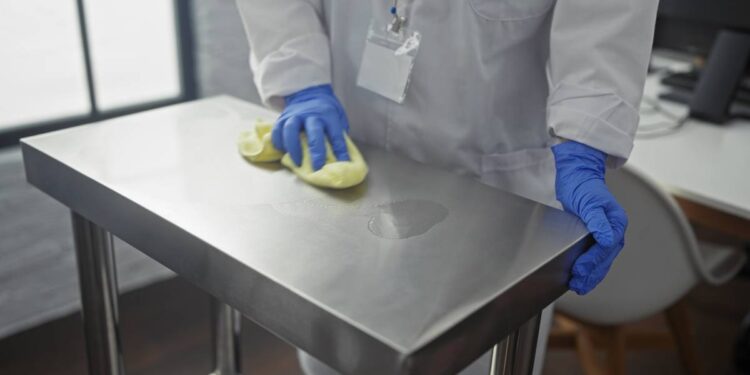
A lab professional wears blue latex gloves and a white lab coat to wipe down the stainless steel table surface.

Laboratory safety depends on meticulous attention to detail, yet many facilities focus primarily on obvious contamination points while overlooking critical surfaces that harbor pathogens and chemical residues.

Healthcare professionals understand that effective laboratory hygiene extends far beyond wiping down benchtops and disposing of sharps. Hidden contamination sites can compromise experimental integrity, endanger personnel, and create liability issues. Don’t neglect these surfaces in your lab cleaning process if you intend to maintain compliance and ethics.

Fume Hoods Require Specialized Decontamination

Chemical vapors and particulates accumulate within fume hood chambers, creating invisible contamination layers that standard cleaning methods cannot address. Interior surfaces collect microscopic residues from volatile compounds, requiring specialized solvents and extended contact times for complete removal.

Begin decontamination by removing all equipment and materials from the chamber. Apply appropriate chemical-specific cleaning agents to interior walls, working from top to bottom to prevent recontamination of cleaned surfaces. Pay particular attention to airflow baffles and sash tracks where residues concentrate. Monthly deep cleaning should include dismantling removable components for thorough sanitization.

Equipment Control Panels Harbor Persistent Contamination

Digital interfaces and control mechanisms create ideal conditions for pathogen survival due to frequent handling and irregular cleaning schedules. Textured surfaces, crevices around buttons, and touchscreen interfaces trap biological materials that resist standard disinfection methods.

Select compatible disinfectants that won’t damage sensitive electronic components while maintaining efficacy against target pathogens. Apply solutions using lint-free cloths rather than spray bottles to prevent moisture infiltration into electrical systems. Allow adequate contact time before wiping surfaces dry to ensure appropriate pathogen elimination.

Storage Areas Accumulate Hidden Contamination

Shelving units, cabinet interiors, and storage compartments often escape routine cleaning attention despite constant exposure to airborne contaminants and spillage events. These areas develop biofilm formation over time, creating persistent contamination sources that compromise stored materials.

Empty storage areas completely before beginning decontamination procedures. Clean all surfaces with appropriate antimicrobial solutions, ensuring complete coverage of vertical and horizontal planes. Inspect for signs of moisture accumulation or pest activity that could indicate systematic contamination issues.

Sinks and Drains Present Unique Challenges

Plumbing systems create complex contamination pathways that extend beyond visible surfaces. Biofilm development within drain systems can release pathogens into laboratory air through aerosol generation during routine use.

Chemical compatibility becomes critical when selecting drain cleaning products, as incompatible mixtures create hazardous reactions or damage plumbing infrastructure. Establish protocols that address biological and chemical contamination without compromising facility systems.

To learn more about lab disinfection protocols specific to your facility type, consult with infection control specialists who design customized cleaning regimens based on your specific risk profile and regulatory requirements.

Comprehensive laboratory cleaning requires systematic attention to easily overlooked surfaces that can compromise safety and accuracy. Healthcare professionals must recognize that effective contamination control extends beyond obvious contact points to include complex systems and hidden surfaces. Don’t ignore these surfaces in your lab cleaning processes.


ShareTweet
Casey Cartwright

Casey Cartwright

Casey is a passionate copyeditor highly motivated to provide compelling SEO content in the digital marketing space. Her expertise includes a vast range of industries from highly technical, consumer, and lifestyle-based, with an emphasis on attention to detail and readability.

Leave a Reply Cancel reply

Your email address will not be published. Required fields are marked *

Videos

In this episode of the Daily Remedy Podcast, Tiffany Ryder discusses her insights on healthcare messaging, the impact of COVID-19 on patient trust, and the importance of transparency in health policy. She emphasizes the need for clear communication in the face of divisiveness and explores the complexities surrounding the estrogen debate. Additionally, Tiffany highlights positive developments in health policy and the necessity of effectively conveying these changes to the public.

Tiffany Ryder is a political commentator and public health policy thought leader who publishes the Substack newsletter Signal and Noise: https://signalandnoise.online/


Chapters

00:00 Introduction to Healthcare Conversations
02:58 Signal and Noise: Understanding Healthcare Communication
05:56 The Storytelling Problem in Healthcare
08:58 Navigating Political Divisiveness in Health Policy
11:55 The Role of Media in Health Policy
15:03 Bias in Health Reporting
17:56 Estrogen and Health Policy: A Case Study
24:00 Positive Developments in Health Policy
27:03 Looking Ahead: Future of Health Policy
31:49 Communicating Health Policy Effectively
The Impact of COVID-19 on Patient Trust
YouTube Video ujzgl7HDlsw
Subscribe

2027 Medicare Advantage & Part D Advance Notice

Clinical Reads

GLP-1 Drugs Have Moved Past Weight Loss. Medicine Has Not Fully Caught Up.

Glucagon-Like Peptide–Based Therapies and Longevity: Clinical Implications from Emerging Evidence

by Daily Remedy
March 1, 2026
0

Glucagon-like peptide–based therapies are increasingly used for weight management and glycemic control, but their potential impact on long-term survival remains uncertain. The clinical question addressed in this report is whether treatment with glucagon-like peptide receptor agonists is associated with reductions in all-cause mortality and age-related morbidity beyond their established metabolic effects. This question matters because these agents are now prescribed across broad patient populations, including individuals without diabetes, and long-term exposure may influence cardiovascular, oncologic, and neurodegenerative outcomes. Understanding whether...

Read more

Join Our Newsletter!

Twitter Updates

Tweets by TheDailyRemedy

Popular

  • When the Taboo Becomes Therapeutic

    When the Taboo Becomes Therapeutic

    0 shares
    Share 0 Tweet 0
  • The Curious Case of Dr. Xiulu Ruan

    1 shares
    Share 0 Tweet 0
  • Familiarity Biases

    0 shares
    Share 0 Tweet 0
  • When Illness Has No Lab Value

    0 shares
    Share 0 Tweet 0
  • When Appetite Becomes Optional

    0 shares
    Share 0 Tweet 0
  • 628 Followers

Daily Remedy

Daily Remedy offers the best in healthcare information and healthcare editorial content. We take pride in consistently delivering only the highest quality of insight and analysis to ensure our audience is well-informed about current healthcare topics - beyond the traditional headlines.

Daily Remedy website services, content, and products are for informational purposes only. We do not provide medical advice, diagnosis, or treatment. All rights reserved.

Important Links

  • Support Us
  • About Us
  • Contact us
  • Privacy Policy
  • Terms and Conditions

Join Our Newsletter!

  • Survey
  • Podcast
  • About Us
  • Contact us

© 2026 Daily Remedy

No Result
View All Result
  • Home
  • Articles
  • Podcasts
  • Surveys
  • Courses
  • About Us
  • Contact us
  • Support Us
  • Official Learner

© 2026 Daily Remedy