













Tuesday, March 3, 2026
ISSN 2765-8767
  • Survey
  • Podcast
  • Write for Us
  • My Account
  • Log In
Daily Remedy
  • Home
  • Articles
  • Podcasts
    The Impact of COVID-19 on Patient Trust

    The Impact of COVID-19 on Patient Trust

    March 3, 2026
    Debunking Myths About GLP-1 Medications

    Debunking Myths About GLP-1 Medications

    February 16, 2026
    The Future of LLMs in Healthcare

    The Future of LLMs in Healthcare

    January 26, 2026
    The Future of Healthcare Consumerism

    The Future of Healthcare Consumerism

    January 22, 2026
    Your Body, Your Health Care: A Conversation with Dr. Jeffrey Singer

    Your Body, Your Health Care: A Conversation with Dr. Jeffrey Singer

    July 1, 2025

    The cost structure of hospitals nearly doubles

    July 1, 2025
  • Surveys

    Surveys

    Perceptions of Viral Wellness Practices on Social Media: A Likert-Scale Survey for Informed Readers

    Perceptions of Viral Wellness Practices on Social Media: A Likert-Scale Survey for Informed Readers

    March 1, 2026
    How Confident Are You in RFK Jr.’s Health Leadership?

    How Confident Are You in RFK Jr.’s Health Leadership?

    February 16, 2026

    Survey Results

    Can you tell when your provider does not trust you?

    Can you tell when your provider does not trust you?

    January 18, 2026
    Do you believe national polls on health issues are accurate

    National health polls: trust in healthcare system accuracy?

    May 8, 2024
    Which health policy issues matter the most to Republican voters in the primaries?

    Which health policy issues matter the most to Republican voters in the primaries?

    May 14, 2024
    How strongly do you believe that you can tell when your provider does not trust you?

    How strongly do you believe that you can tell when your provider does not trust you?

    May 7, 2024
  • Courses
  • About Us
  • Contact us
  • Support Us
  • Official Learner
No Result
View All Result
  • Home
  • Articles
  • Podcasts
    The Impact of COVID-19 on Patient Trust

    The Impact of COVID-19 on Patient Trust

    March 3, 2026
    Debunking Myths About GLP-1 Medications

    Debunking Myths About GLP-1 Medications

    February 16, 2026
    The Future of LLMs in Healthcare

    The Future of LLMs in Healthcare

    January 26, 2026
    The Future of Healthcare Consumerism

    The Future of Healthcare Consumerism

    January 22, 2026
    Your Body, Your Health Care: A Conversation with Dr. Jeffrey Singer

    Your Body, Your Health Care: A Conversation with Dr. Jeffrey Singer

    July 1, 2025

    The cost structure of hospitals nearly doubles

    July 1, 2025
  • Surveys

    Surveys

    Perceptions of Viral Wellness Practices on Social Media: A Likert-Scale Survey for Informed Readers

    Perceptions of Viral Wellness Practices on Social Media: A Likert-Scale Survey for Informed Readers

    March 1, 2026
    How Confident Are You in RFK Jr.’s Health Leadership?

    How Confident Are You in RFK Jr.’s Health Leadership?

    February 16, 2026

    Survey Results

    Can you tell when your provider does not trust you?

    Can you tell when your provider does not trust you?

    January 18, 2026
    Do you believe national polls on health issues are accurate

    National health polls: trust in healthcare system accuracy?

    May 8, 2024
    Which health policy issues matter the most to Republican voters in the primaries?

    Which health policy issues matter the most to Republican voters in the primaries?

    May 14, 2024
    How strongly do you believe that you can tell when your provider does not trust you?

    How strongly do you believe that you can tell when your provider does not trust you?

    May 7, 2024
  • Courses
  • About Us
  • Contact us
  • Support Us
  • Official Learner
No Result
View All Result
Daily Remedy
No Result
View All Result
Home Politics & Law

Lawmakers Trying to Remove Licensing Hurdles for Social Workers

Legal navigation at its finest

Jeffrey A Singer by Jeffrey A Singer
February 24, 2024
in Politics & Law
0
Lawmakers Trying to Remove Licensing Hurdles for Social Workers

Getty Images

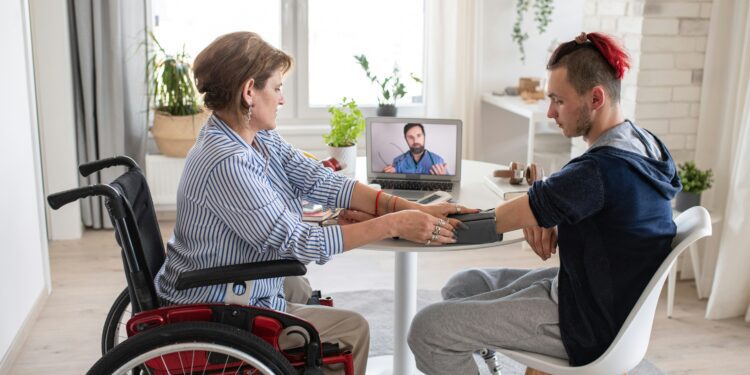
Behavioral health providers can deliver effective mental health services using telehealth technology. Yet state licensing laws block people from accessing telehealth services from providers who hold out‐​of‐​state licenses.

According to the Health Resources and Services Administration, social workers accounted for more than 239,000 of the roughly 786,000 total behavioral health workforce in 2017. Social workers comprise 45 percent of Department of Defense mental health professionals caring for military personnel and their spouses and see 42 percent of all encounters in the military that involve mental health or substance abuse problems. In the US, mental health problems continue to grow among all age groups, leading a recent gathering of seven US Surgeons General to declare it a crisis.

In 2021, Arizona lawmakers passed landmark “universal telehealth” legislation allowing any health care practitioner with an out‐​of‐​state license to provide telehealth services to Arizonans without applying for an Arizona license. Since then, six other states have passed similar laws. Unfortunately, no state counts social workers among the out‐​of‐​state health care practitioners who may provide telehealth services to their residents. So, people in those states who want to access social workers for behavioral health counseling are out of luck.

Now, social workers are seeking to convince lawmakers in 27 states to establish an interstate compact that will provide social workers with a license recognized by all states in the compact. So far, Missouri and South Dakota have joined the compact. Arizona lawmakers are considering SB 1036 during the current legislative session, which, if passed, would add Arizona to the compact. Colorado may soon join the compact as well, as its lawmakers are considering HB24-1002. When five states have joined, a compact commission will be able to establish requirements for social workers to apply for a compact license. Social workers who don’t want a compact license can opt to be licensed only in their state.

In 2019, Arizona was the first state to enact “universal license recognition,” enabling people who relocate to Arizona with out‐​of‐​state occupational or professional licenses to work without applying for an Arizona license. By 2023, 14 states passed similar laws. Unlike Arizona, some states don’t require holders of out‐​of‐​state licensees to relocate there.

Ideally, states should repeal all licensing laws and allow third‐​party certification organizations to perform licensing boards’ functions. If that is not politically feasible, all 50 states and the District of Columbia could enact universal license recognition that doesn’t require out‐​of‐​state licensees to move to their states permanently. Unfortunately, American patients will have to wait a long time before seeing anything resembling either of these two outcomes.

In the meantime, by creating a sizeable interstate compact that lets people in all member states access service providers, lawmakers are taking a big step toward liberating patients from protectionist licensing laws that are a relic of a bygone era.

Whether they pass universal license recognition laws, universal telehealth laws, or multi‐​state compacts, state lawmakers continue to create licensing law workarounds. In the process, they tacitly acknowledge that licensing laws block access to care.


Source: Cato At Liberty
ShareTweet
Jeffrey A Singer

Jeffrey A Singer

Jeffrey A. Singer is a senior fellow at the Cato Institute and works in the Department of Health Policy Studies. He is President Emeritus and founder of Valley Surgical Clinics Ltd., the largest and oldest group private surgical practice in Arizona, and has been in private practice as a general surgeon for more than 35 years.

Leave a Reply Cancel reply

Your email address will not be published. Required fields are marked *

Videos

In this episode of the Daily Remedy Podcast, Tiffany Ryder discusses her insights on healthcare messaging, the impact of COVID-19 on patient trust, and the importance of transparency in health policy. She emphasizes the need for clear communication in the face of divisiveness and explores the complexities surrounding the estrogen debate. Additionally, Tiffany highlights positive developments in health policy and the necessity of effectively conveying these changes to the public.

Takeaways

Tiffany Ryder emphasizes the importance of patient involvement in healthcare decisions.
The publication 'Signal and Noise' aims to clarify healthcare messaging.
COVID-19 has significantly altered patient trust in healthcare institutions.
Media narratives can distort the reality of health policy discussions.
Tiffany's clinical background informs her perspective on health policy.
The estrogen debate highlights the need for robust data in healthcare decisions.
Fear-based messaging can hinder women's access to hormone replacement therapy.
Positive changes in food policy can impact public health outcomes.
Transparency in communication is crucial for rebuilding public trust.
Tiffany advocates for clear messaging to accompany policy changes.


Chapters

00:00 Introduction to Healthcare Conversations
02:58 Signal and Noise: Understanding Healthcare Communication
05:56 The Storytelling Problem in Healthcare
08:58 Navigating Political Divisiveness in Health Policy
11:55 The Role of Media in Health Policy
15:03 Bias in Health Reporting
17:56 Estrogen and Health Policy: A Case Study
24:00 Positive Developments in Health Policy
27:03 Looking Ahead: Future of Health Policy
31:49 Communicating Health Policy Effectively
The Impact of COVID-19 on Patient Trust
YouTube Video ujzgl7HDlsw
Subscribe

2027 Medicare Advantage & Part D Advance Notice

Clinical Reads

GLP-1 Drugs Have Moved Past Weight Loss. Medicine Has Not Fully Caught Up.

Glucagon-Like Peptide–Based Therapies and Longevity: Clinical Implications from Emerging Evidence

by Daily Remedy
March 1, 2026
0

Glucagon-like peptide–based therapies are increasingly used for weight management and glycemic control, but their potential impact on long-term survival remains uncertain. The clinical question addressed in this report is whether treatment with glucagon-like peptide receptor agonists is associated with reductions in all-cause mortality and age-related morbidity beyond their established metabolic effects. This question matters because these agents are now prescribed across broad patient populations, including individuals without diabetes, and long-term exposure may influence cardiovascular, oncologic, and neurodegenerative outcomes. Understanding whether...

Read more

Join Our Newsletter!

Twitter Updates

Tweets by TheDailyRemedy

Popular

  • When Health Records Become Hostage: The Rise of Espionage in Healthcare Data Breaches

    When Health Records Become Hostage: The Rise of Espionage in Healthcare Data Breaches

    1 shares
    Share 0 Tweet 0
  • When Prognosis Becomes Probabilistic

    0 shares
    Share 0 Tweet 0
  • The Healthcare Jungle

    0 shares
    Share 0 Tweet 0
  • Gaming Therapy

    0 shares
    Share 0 Tweet 0
  • Abortion’s Precedent

    0 shares
    Share 0 Tweet 0
  • 628 Followers

Daily Remedy

Daily Remedy offers the best in healthcare information and healthcare editorial content. We take pride in consistently delivering only the highest quality of insight and analysis to ensure our audience is well-informed about current healthcare topics - beyond the traditional headlines.

Daily Remedy website services, content, and products are for informational purposes only. We do not provide medical advice, diagnosis, or treatment. All rights reserved.

Important Links

  • Support Us
  • About Us
  • Contact us
  • Privacy Policy
  • Terms and Conditions

Join Our Newsletter!

  • Survey
  • Podcast
  • About Us
  • Contact us

© 2026 Daily Remedy

No Result
View All Result
  • Home
  • Articles
  • Podcasts
  • Surveys
  • Courses
  • About Us
  • Contact us
  • Support Us
  • Official Learner

© 2026 Daily Remedy
