












Friday, May 1, 2026
ISSN 2765-8767
  • Survey
  • Podcast
  • Write for Us
  • My Account
  • Log In
Daily Remedy
  • Home
  • Articles
  • Podcasts
    How NADAC, WAC, and ASP Shape Drug Costs

    How NADAC, WAC, and ASP Shape Drug Costs

    April 20, 2026
    The Hidden Costs Employers Don’t See in Traditional Health Plans

    The Hidden Costs Employers Don’t See in Traditional Health Plans

    March 22, 2026
    The Impact of COVID-19 on Patient Trust

    The Impact of COVID-19 on Patient Trust

    March 3, 2026
    Debunking Myths About GLP-1 Medications

    Debunking Myths About GLP-1 Medications

    February 16, 2026
    The Future of LLMs in Healthcare

    The Future of LLMs in Healthcare

    January 26, 2026
    The Future of Healthcare Consumerism

    The Future of Healthcare Consumerism

    January 22, 2026
  • Surveys

    Surveys

    Public Perception of Peptide Regulation and Compounding Practices

    Public Perception of Peptide Regulation and Compounding Practices

    April 19, 2026
    Understanding of Clinical Evidence in Peptide and Hormone Use

    Understanding of Clinical Evidence in Peptide and Hormone Use

    March 30, 2026

    Survey Results

    Can you tell when your provider does not trust you?

    Can you tell when your provider does not trust you?

    January 18, 2026
    Do you believe national polls on health issues are accurate

    National health polls: trust in healthcare system accuracy?

    May 8, 2024
    Which health policy issues matter the most to Republican voters in the primaries?

    Which health policy issues matter the most to Republican voters in the primaries?

    May 14, 2024
    How strongly do you believe that you can tell when your provider does not trust you?

    How strongly do you believe that you can tell when your provider does not trust you?

    May 7, 2024
  • Courses
  • About Us
  • Contact us
  • Support Us
  • Official Learner
No Result
View All Result
  • Home
  • Articles
  • Podcasts
    How NADAC, WAC, and ASP Shape Drug Costs

    How NADAC, WAC, and ASP Shape Drug Costs

    April 20, 2026
    The Hidden Costs Employers Don’t See in Traditional Health Plans

    The Hidden Costs Employers Don’t See in Traditional Health Plans

    March 22, 2026
    The Impact of COVID-19 on Patient Trust

    The Impact of COVID-19 on Patient Trust

    March 3, 2026
    Debunking Myths About GLP-1 Medications

    Debunking Myths About GLP-1 Medications

    February 16, 2026
    The Future of LLMs in Healthcare

    The Future of LLMs in Healthcare

    January 26, 2026
    The Future of Healthcare Consumerism

    The Future of Healthcare Consumerism

    January 22, 2026
  • Surveys

    Surveys

    Public Perception of Peptide Regulation and Compounding Practices

    Public Perception of Peptide Regulation and Compounding Practices

    April 19, 2026
    Understanding of Clinical Evidence in Peptide and Hormone Use

    Understanding of Clinical Evidence in Peptide and Hormone Use

    March 30, 2026

    Survey Results

    Can you tell when your provider does not trust you?

    Can you tell when your provider does not trust you?

    January 18, 2026
    Do you believe national polls on health issues are accurate

    National health polls: trust in healthcare system accuracy?

    May 8, 2024
    Which health policy issues matter the most to Republican voters in the primaries?

    Which health policy issues matter the most to Republican voters in the primaries?

    May 14, 2024
    How strongly do you believe that you can tell when your provider does not trust you?

    How strongly do you believe that you can tell when your provider does not trust you?

    May 7, 2024
  • Courses
  • About Us
  • Contact us
  • Support Us
  • Official Learner
No Result
View All Result
Daily Remedy
No Result
View All Result
Home Perspectives

Media Sensationalism in the Opioid Epidemic

My first taste came during my last days of seeing patients.

Daily Remedy by Daily Remedy
May 6, 2024
in Perspectives
0
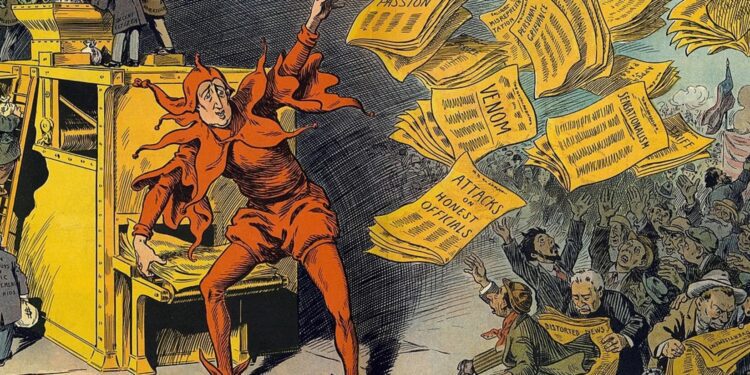
Media Sensationalism in the Opioid Epidemic

Library of Congress

Glide your hand over a piece of velvet and you notice the smoothness. You feel its aggregated smoothness, not the individualized roughness of each fiber. Each fleeting fiber, a prick of truth, is nullified, synthesized, and then magnified into the silky fluency of general perception—propaganda containing within it a concoction of ambiguities and assumptions, cooked with a splash of outright lies and a dash of truth. This is to ensure the intrigue rises to a level that is just right, just unbelievably believable. I experienced this dish, served in all its varieties with all the flair and pomp, until I could eat no more. And then the dish forced its way down my throat, revealing an unsettling truth about the intricacies of healthcare policy, healthcare system management, modern medicine, and innovations in healthcare, all entangled within the fabric of societal perception and mental health concerns.

The Courthouse: A Symbol of Healthcare Policy Contradictions

My first taste came during my last days of seeing patients. On a Friday, I received a call that indicated I was to be indicted. I had to first search the term to verify its definition, and even then, I did not grasp its immense implications. I was not yet able to process that I was being accused of a crime. I continued seeing patients the next day, Saturday—a physician until the very end. I reported to the federal courthouse in Hammond, Indiana, on Monday.

The courthouse is a truly impressive building in an otherwise dilapidated neighborhood. I suppose there is symbolism in that contrast, but I was too consumed with my own symbolism to pay that contrast any mind. The legal proceedings were brief, surprisingly polite, and more ceremonial than judicial, with none of the fanfare one might expect in what was—or perceived to be, at least—a high-profile criminal case. That soon contrasted with the virulent propaganda in which I was immersed—article by article, drop by drop.

The Flood of Misinformation and Its Impact on Healthcare Policy

The first news article, a harmless drop in an otherwise empty bucket, made its presence known through a transient splash…followed by a moment of silence. And the moment was over, disrupted by another drop and then a rapid series of drops, until they were no longer drops, but a stream. A rumbling, noisy stream of news and hearsay overflowed from the bucket, spreading out with accelerating aggression to permeate the minds of readers, gossips, and rumormongers. Then the stream turned into a flood, a deluge of destruction, ensuring its presence was felt and its impact known.

Falsified Claims and the Top Prescriber in Healthcare Policy Debacle

News reports claimed I gave pills to relatives and acquaintances of federal agents and coordinated a multistate drug operation. Those who followed the flood as closely as I floated in it likely learned what was written about me at the same time I did. We learned I was the top prescriber of opioids in the area I practiced, and one of the top opioid prescribers in the state of Indiana. We even heard I was impersonating another physician.

Navigating Healthcare Policy and Media Sensationalism

The articles grew to be so numerous they competed for attention with one another. The crafting of each article became a coordinated dance, a bid for attention between reader and writer. These writers used scandal to attract readers, twisting key facts, deliberately introducing ambiguities to create an air of suspense in an evolutionary process of journalistic adaptation—attention being the competitive prize.

Adaptation and the Evolution of Healthcare Policy Reporting

The outright dishonest articles soon went extinct, leaving articles more successfully fit—in the most Darwinian sense—for navigating the ever-blurring distinction between truth and fabrication. Each article’s competitive advantage came from the selective use of sensationalistic terms or buzzwords and phrases appearing regularly as to warrant the familiarity of trust but unique enough to captivate with the thrill of novelty.

Perception, Reaction, and the Dance of Healthcare Policy Reporting

Soon the words danced from article to article, displaying different styles and techniques, sometimes subtle, sometimes crude. The dance became as enticing to the reader as the underlying content. In such a dance, some readers create their own perceptions as much as they respond to what they read. The coordination of perception and reaction continued, increasing in fervor, inside the minds of my colleagues, friends, and family—manifesting the most acute responses with utmost subtlety.


Burden of Pain
Cover of Burden of Pain
ShareTweet
Daily Remedy

Daily Remedy

Dr. Jay K Joshi serves as the editor-in-chief of Daily Remedy. He is a serial entrepreneur and sought after thought-leader for matters related to healthcare innovation and medical jurisprudence. He has published articles on a variety of healthcare topics in both peer-reviewed journals and trade publications. His legal writings include amicus curiae briefs prepared for prominent federal healthcare cases.

Comments 0

  1. George Gettinger says:
    2 years ago

    Have you ever thought about adding a little bit more than just your thoughts? I mean, what you say is important and everything. But its got no punch, no pop! Maybe if you added a pic or two, a video? You could have such a more powerful blog if you let people SEE what youre talking about instead of just reading it.

    Reply

Leave a Reply Cancel reply

Your email address will not be published. Required fields are marked *

Videos

summary

An in-depth exploration of drug pricing, including key databases like NADAC, WAC, and ASP, and how they influence the pharmaceutical supply chain, policy, and patient advocacy. The episode also introduces MedPricer's innovative pricing intelligence platform, offering valuable insights for healthcare professionals, policymakers, and patients.

Chapters

00:00 Understanding Drug Pricing Dynamics
03:52 Exploring the Drug Pricing Database
10:07 Patient Advocacy and Drug Pricing
13:56 Market Intelligence in Drug Pricing
How NADAC, WAC, and ASP Shape Drug CostsDaily Remedy
YouTube Video X-Tfwy7XKEg
Subscribe

Policy Shift in Peptide Regulation

Clinical Reads

FDA Evaluation of Certain Bulk Drug Substances in Compounding: Clinical Interpretation

FDA Evaluation of Certain Bulk Drug Substances in Compounding: Clinical Interpretation

by Daily Remedy
April 19, 2026
0

Clinicians increasingly encounter patients using or requesting peptide-based therapies sourced through compounding pharmacies. The U.S. Food and Drug Administration has identified a subset of bulk drug substances, including certain peptides, that may present significant safety risks when used in compounded formulations. The clinical question is whether these regulatory signals reflect meaningful patient-level risk and how they should influence prescribing behavior. This matters because compounded peptides often sit outside traditional approval pathways, creating uncertainty around quality, dosing consistency, and safety. Understanding...

Read more

Join Our Newsletter!

Twitter Updates

Tweets by TheDailyRemedy

Popular

  • Employer-Sponsored Insurance Is Breaking Down. Price Data Tells You Where It’s Happening First.

    Employer-Sponsored Insurance Is Breaking Down. Price Data Tells You Where It’s Happening First.

    0 shares
    Share 0 Tweet 0
  • The Importance of Access Control in the Workplace

    0 shares
    Share 0 Tweet 0
  • Drug Pricing Transparency in an Era of Political Polarization: What MedPricer’s Data Reveals About a Contested Policy Landscape

    0 shares
    Share 0 Tweet 0
  • Detecting Hospital M&A Synergies Before They’re Announced: A Rate-Based Event Strategy

    0 shares
    Share 0 Tweet 0
  • State Regulators and the Federal Data Gap: How MedPricer Fills What CMS Leaves Incomplete

    0 shares
    Share 0 Tweet 0
  • 628 Followers

Daily Remedy

Daily Remedy offers the best in healthcare information and healthcare editorial content. We take pride in consistently delivering only the highest quality of insight and analysis to ensure our audience is well-informed about current healthcare topics - beyond the traditional headlines.

Daily Remedy website services, content, and products are for informational purposes only. We do not provide medical advice, diagnosis, or treatment. All rights reserved.

Important Links

  • Support Us
  • About Us
  • Contact us
  • Privacy Policy
  • Terms and Conditions

Join Our Newsletter!

  • Survey
  • Podcast
  • About Us
  • Contact us

© 2026 Daily Remedy

No Result
View All Result
  • Home
  • Articles
  • Podcasts
  • Surveys
  • Courses
  • About Us
  • Contact us
  • Support Us
  • Official Learner

© 2026 Daily Remedy
