












Wednesday, July 15, 2026
ISSN 2765-8767
  • Home
  • Courses
  • About Us
  • Contact us
  • Support Us
  • Home
  • Courses
  • About Us
  • Contact us
  • Support Us

Chaos theory can explain the uncertainty of COVID-19

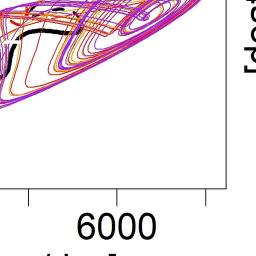
While predicting the course of an epidemic is difficult, predicting the course of a pandemic from an emerging virus is even more so. The validity of most predictive models relies on numerous parameters, involving biological and social characteristics often unknown or highly uncertain. Data of the COVID-19 epidemics in China, Japan, South Korea and Italy were used to build up deterministic models without strong assumptions. These models were then applied to other countries to identify the closest scenarios in order to foresee their coming behaviour. The models enabled to predict situations that were confirmed little by little, proving that these tools can be efficient and useful for decision making in a quickly evolving operational context.

Source:

S. Mangiarotti, M. Peyre, Y. Zhang, M. Huc, F. Roger, Y. Kerr
Epidemiol Infect. 2020; 148: e95. Published online 2020 May 8. doi: 10.1017/S0950268820000990
Daily Remedy

Daily Remedy

Dr. Jay K Joshi serves as the editor-in-chief of Daily Remedy. He is a serial entrepreneur and sought after thought-leader for matters related to healthcare innovation and medical jurisprudence. He has published articles on a variety of healthcare topics in both peer-reviewed journals and trade publications. His legal writings include amicus curiae briefs prepared for prominent federal healthcare cases.

Videos

Policy Shift in Peptide Regulation

FDA Evaluation of Certain Bulk Drug Substances in Compounding: Clinical Interpretation

FDA Evaluation of Certain Bulk Drug Substances in Compounding: Clinical Interpretation

Clinicians increasingly encounter patients using or requesting peptide-based therapies sourced through compounding pharmacies. The U.S. Food and Drug Administration has identified a subset of bulk drug substances, including certain peptides, that may present significant safety risks when used in compounded formulations. The clinical question is whether these regulatory signals reflect meaningful patient-level risk and how they should influence prescribing behavior. This matters because compounded peptides often sit outside traditional approval pathways, creating uncertainty around quality, dosing consistency, and safety. Understanding...

Read more

Join Our Newsletter!

