












Wednesday, July 15, 2026
ISSN 2765-8767
  • Home
  • Courses
  • About Us
  • Contact us
  • Support Us
  • Home
  • Courses
  • About Us
  • Contact us
  • Support Us

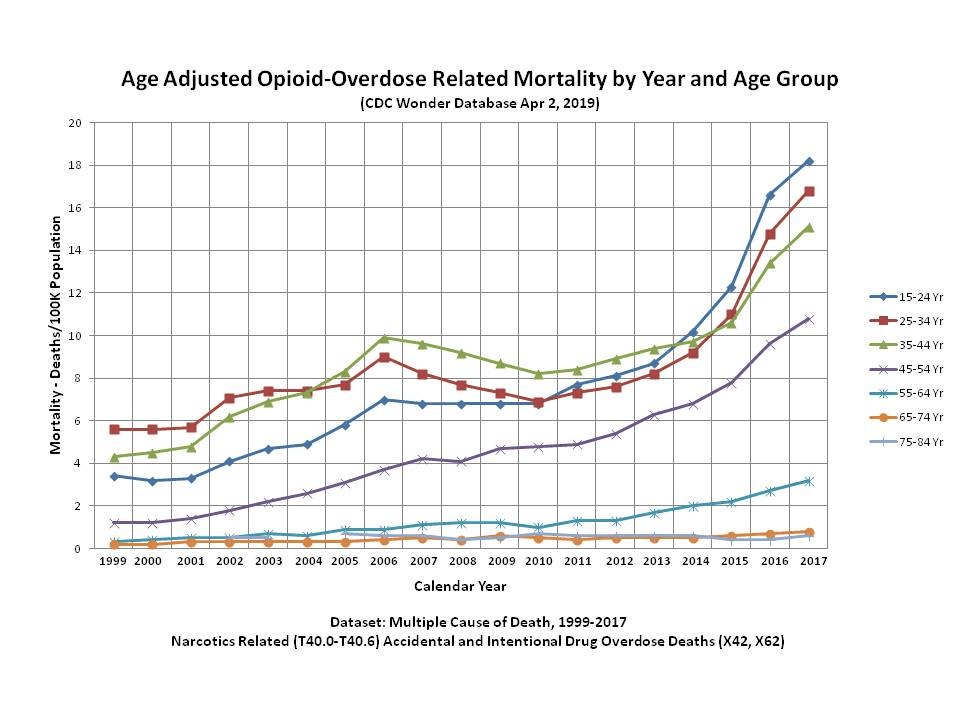
Opioid epidemic in one chart – correlation conflated with causation

There is no cause-and-effect relationship between prescribing and overdose mortality. But millions of patients are being denied safe and effective pain care.

Seniors over age 62 are prescribed opioids for pain three times more often than youth under age 19. But youth have overdose rates three times higher than seniors. No medical model can explain these demographics.

Source: Richard A Lawhern, PhD, Patient Advocate

Daily Remedy

Daily Remedy

Dr. Jay K Joshi serves as the editor-in-chief of Daily Remedy. He is a serial entrepreneur and sought after thought-leader for matters related to healthcare innovation and medical jurisprudence. He has published articles on a variety of healthcare topics in both peer-reviewed journals and trade publications. His legal writings include amicus curiae briefs prepared for prominent federal healthcare cases.

Videos

Policy Shift in Peptide Regulation

FDA Evaluation of Certain Bulk Drug Substances in Compounding: Clinical Interpretation

FDA Evaluation of Certain Bulk Drug Substances in Compounding: Clinical Interpretation

Clinicians increasingly encounter patients using or requesting peptide-based therapies sourced through compounding pharmacies. The U.S. Food and Drug Administration has identified a subset of bulk drug substances, including certain peptides, that may present significant safety risks when used in compounded formulations. The clinical question is whether these regulatory signals reflect meaningful patient-level risk and how they should influence prescribing behavior. This matters because compounded peptides often sit outside traditional approval pathways, creating uncertainty around quality, dosing consistency, and safety. Understanding...

Read more

Join Our Newsletter!

