












Wednesday, March 18, 2026
ISSN 2765-8767
  • Home
  • Courses
  • About Us
  • Contact us
  • Support Us
  • Home
  • Courses
  • About Us
  • Contact us
  • Support Us

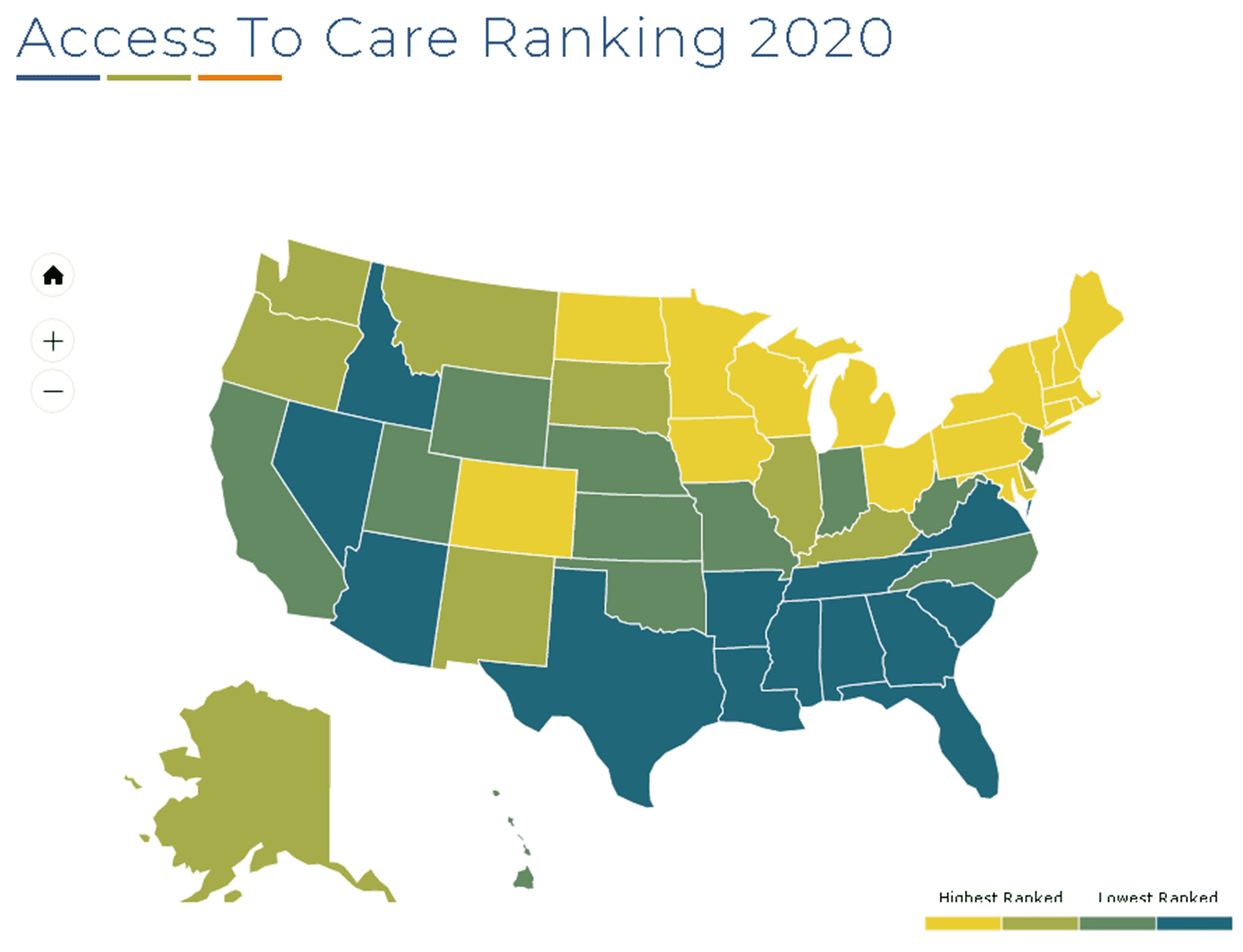
State by state mental health access ranking

The Access Ranking indicates how much access to mental health care exists within a state. The access measures include access to insurance, access to treatment, quality and cost of insurance, access to special education, and workforce availability. A high Access Ranking indicates that a state provides relatively more access to insurance and mental health treatment.

The 9 measures that make up the Access Ranking include:

Adults with AMI who Did Not Receive Treatment
Adults with AMI Reporting Unmet Need
Adults with AMI who are Uninsured
Adults with Disability who Could Not See a Doctor Due to Costs
Youth with MDE who Did Not Receive Mental Health Services
Youth with Severe MDE who Received Some Consistent Treatment
Children with Private Insurance that Did Not Cover Mental or Emotional Problems
Students Identified with Emotional Disturbance for an Individualized Education Program
Mental Health Workforce Availability

Source: Mental Health America

Daily Remedy

Daily Remedy

Dr. Jay K Joshi serves as the editor-in-chief of Daily Remedy. He is a serial entrepreneur and sought after thought-leader for matters related to healthcare innovation and medical jurisprudence. He has published articles on a variety of healthcare topics in both peer-reviewed journals and trade publications. His legal writings include amicus curiae briefs prepared for prominent federal healthcare cases.

Videos

Policy Shift in Peptide Regulation

GLP-1 Drugs Have Moved Past Weight Loss. Medicine Has Not Fully Caught Up.

Glucagon-Like Peptide–Based Therapies and Longevity: Clinical Implications from Emerging Evidence

Glucagon-like peptide–based therapies are increasingly used for weight management and glycemic control, but their potential impact on long-term survival remains uncertain. The clinical question addressed in this report is whether treatment with glucagon-like peptide receptor agonists is associated with reductions in all-cause mortality and age-related morbidity beyond their established metabolic effects. This question matters because these agents are now prescribed across broad patient populations, including individuals without diabetes, and long-term exposure may influence cardiovascular, oncologic, and neurodegenerative outcomes. Understanding whether...

Read more

Join Our Newsletter!
