













Sunday, January 18, 2026
ISSN 2765-8767
  • Survey
  • Podcast
  • Write for Us
  • My Account
  • Log In
Daily Remedy
  • Home
  • Articles
  • Podcasts
    Your Body, Your Health Care: A Conversation with Dr. Jeffrey Singer

    Your Body, Your Health Care: A Conversation with Dr. Jeffrey Singer

    July 1, 2025

    The cost structure of hospitals nearly doubles

    July 1, 2025
    Navigating the Medical Licensing Maze

    The Fight Against Healthcare Fraud: Dr. Rafai’s Story

    April 8, 2025
    Navigating the Medical Licensing Maze

    Navigating the Medical Licensing Maze

    April 4, 2025
    The Alarming Truth About Health Insurance Denials

    The Alarming Truth About Health Insurance Denials

    February 3, 2025
    Telehealth in Turmoil

    The Importance of NIH Grants

    January 31, 2025
  • Surveys

    Surveys

    Patient Survey: Understanding Healthcare Consumerism

    Patient Survey: Understanding Healthcare Consumerism

    January 18, 2026
    Public Confidence in Proposed Changes to U.S. Vaccine Policy

    Public Confidence in Proposed Changes to U.S. Vaccine Policy

    January 3, 2026

    Survey Results

    Do you believe national polls on health issues are accurate

    National health polls: trust in healthcare system accuracy?

    May 8, 2024
    Which health policy issues matter the most to Republican voters in the primaries?

    Which health policy issues matter the most to Republican voters in the primaries?

    May 14, 2024
    How strongly do you believe that you can tell when your provider does not trust you?

    How strongly do you believe that you can tell when your provider does not trust you?

    May 7, 2024
  • Courses
  • About Us
  • Contact us
  • Support Us
  • Official Learner
No Result
View All Result
  • Home
  • Articles
  • Podcasts
    Your Body, Your Health Care: A Conversation with Dr. Jeffrey Singer

    Your Body, Your Health Care: A Conversation with Dr. Jeffrey Singer

    July 1, 2025

    The cost structure of hospitals nearly doubles

    July 1, 2025
    Navigating the Medical Licensing Maze

    The Fight Against Healthcare Fraud: Dr. Rafai’s Story

    April 8, 2025
    Navigating the Medical Licensing Maze

    Navigating the Medical Licensing Maze

    April 4, 2025
    The Alarming Truth About Health Insurance Denials

    The Alarming Truth About Health Insurance Denials

    February 3, 2025
    Telehealth in Turmoil

    The Importance of NIH Grants

    January 31, 2025
  • Surveys

    Surveys

    Patient Survey: Understanding Healthcare Consumerism

    Patient Survey: Understanding Healthcare Consumerism

    January 18, 2026
    Public Confidence in Proposed Changes to U.S. Vaccine Policy

    Public Confidence in Proposed Changes to U.S. Vaccine Policy

    January 3, 2026

    Survey Results

    Do you believe national polls on health issues are accurate

    National health polls: trust in healthcare system accuracy?

    May 8, 2024
    Which health policy issues matter the most to Republican voters in the primaries?

    Which health policy issues matter the most to Republican voters in the primaries?

    May 14, 2024
    How strongly do you believe that you can tell when your provider does not trust you?

    How strongly do you believe that you can tell when your provider does not trust you?

    May 7, 2024
  • Courses
  • About Us
  • Contact us
  • Support Us
  • Official Learner
No Result
View All Result
Daily Remedy
No Result
View All Result
Home Perspectives

Literature Made Me a Doctor

Why the humanities are needed in health care.

Irène Mathieu by Irène Mathieu
January 7, 2024
in Perspectives
0
Literature Made Me a Doctor

National Cancer Institute

While there is a long history of doctor-poets – one giant of mid-20th-century poetry, William Carlos Williams, was famously also a pediatrician – few people seem to know this or understand the power of combining the humanities and medicine.

As a published poet and scholar of the health humanities and ethics, I have a foot squarely planted in each field – or perhaps more accurately, I stand in what I perceive as the overlapping field of healing and poetic practices.

Literature has had a large role in helping me define the kind of physician I strive to be – one who is not only empathetic and a good listener but also a fierce advocate for changing the sociopolitical forces that affect my patients’ lives. I think literature can do this for other health care providers, too.

Narrative competence in medicine

Despite having physicians for parents – or perhaps because of it – initially I had no interest in medicine. It seemed too clinical, too sterile. The work stories my parents shared over the dinner table were intentionally devoid of the personal details that would have interested me.

I was preoccupied with characters in the books I read – who lived in conflict zones, who as children were working instead of playing, who had struggles I couldn’t imagine – and wondered why I had my life and not theirs. What intangible forces shaped their lives in ways different from my own? Now I can directly trace my early infatuation with the written word to my chosen career as a pediatrician and public health researcher.

Medicine is a confluence of scientific and literary thinking.

Narrative medicine is the practice of close reading and reflective writing to build narrative competence. Physician and narrative medicine scholar Rita Charon describes narrative competence as “the ability to acknowledge, absorb, interpret and act on the stories and plights of others.”

Narrative competence, then, could inspire a person to pursue a career in health care and possibly make them a better clinician. In fact, studies of narrative medicine programs have demonstrated that they tend to not only increase students’ empathy and communication skills but also their tolerance for ambiguity and self-confidence. They also improve their open-mindedness, ethical inquiry and perspective taking.

Books introduced me to the breadth and diversity of human experiences and perspectives, as well as to searing inequalities in life outcomes. I wanted to positively change those outcomes in some way – a desire that led me into the arms of medicine, despite my initial misgivings about it.

Using the humanities to address health inequity

Might narrative competence also expand clinicians’ understanding of health disparities and urge them to act in ways that lectures full of statistics couldn’t?

The burgeoning field of critical health humanities theorizes that stories and art can help clinicians understand the unequal realities of different people’s lives and make clinician-patient relationships more therapeutic. It can do this by cultivating clinicians’ awareness of the power differences and structural forces that affect their patients and themselves.

Defining features of this field are collaboration between disciplines – such as between medicine and literature – and a broad understanding of narrative medicine beyond the clinical encounter. Understanding not only human biology but also fields like the history of medicine, queer and disability studies, critical race theory and other forms of knowledge can inform and improve clinical practice.

Clinician in scrubs sitting on a table between library shelves, reading a book
Medical trainees often aren’t given the space to engage with the humanities.
SDI Productions/E+ via Getty Images

For example, a clinician might turn to research from the social sciences to learn about the experiences of people with disabilities. This could lead her to make her practice more accessible to her patients – an action that would improve equity in health care for people with disabilities.

Before ever meeting my first patient, I gained an expanded knowledge of the diversity of human experience from the books I read. It made me curious about my patients’ stories. And when I felt this curiosity flagging because of stress, exhaustion or burnout, refocusing on the stories seemed to help.

However, medical students are inundated with information about the human body in their training and barely have time to learn about the nonmedical aspects of patient experiences. This negates the fact that disease and health happen in varied and disparate social, cultural and political contexts.

For example, diabetes is a very different illness for a patient experiencing homelessness and racism compared with a wealthy patient who doesn’t experience racism. A patient’s access to resources and their interactions with health care staff affect their ability to get the care they need and the degree to which their basic needs are being met. Rarely are these nuances discussed in a medical school’s endocrinology lecture about diabetes.

Fitting in health humanities education

I believe that physicians must find ways to practice their humanity – perhaps using the humanities – if they wish to be effective healers. But how might they actually do this?

There are ways to fit in more health humanities in all the busyness and bustle of notoriously grueling medical education. As a senior resident, I often distributed poems to my team, printing and posting them above the computers in our cramped hospital workrooms or attaching them to email updates about patient care. Once, during a rare quiet moment in the pediatric ICU, with permission from my colleagues, I read a couple of poems out loud. I remember watching my colleagues’ eyes close and their bodies visibly relax as the words washed over them.

Since then, I have shared poems – my own and others’ – in talks at my institution and across the country. I’ve also led other health care providers in creative writing exercises during workshops, lectures and classes. Many institutions host book clubs, story slams, film screenings and other opportunities for medical learners to engage with the humanities.
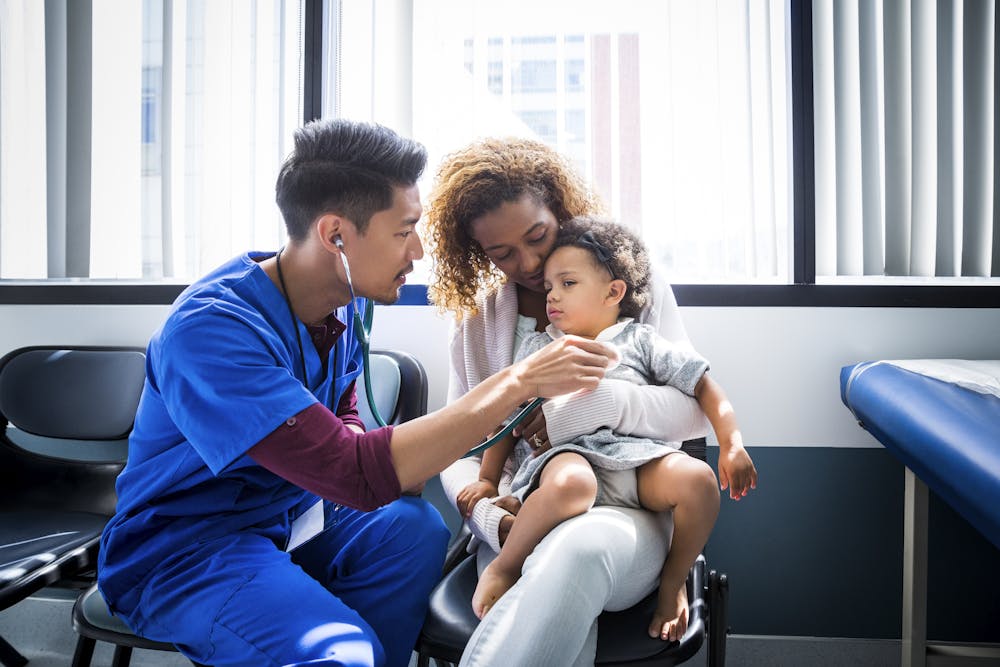
Clinician holding stethoscope over the chest of a toddler sitting in the lap of their parent
Exposing clinicians to the breadth of human experience through the humanities can help them better understand where their patients are coming from.
The Good Brigade/Digital Vision via Getty Images

While poetry can be intimidating to some, many contemporary poems provide approachable emotional experiences.

Pieces like Safiya Sinclair’s “Notes on the State of Virginia, II” viscerally illustrate how a place that seems innocuous or even beautiful to some can be haunting and traumatic for others.

Monica Sok’s “ABC for Refugees” powerfully paints a portrait of a young child caught between languages and cultures – a reality that many pediatric patients face.

“Ode to Small Towns” by Tyree Daye upends common assumptions about rural life and demonstrates the meaning of place in hymnlike vernacular.

In “Medical History,” Nicole Sealey shares a many-layered patient perspective on a part of health care that, for many of my students and colleagues, has been reduced to a series of check boxes on a computer screen.

These and other poems – not to mention short stories, novels, personal essays, films, podcasts and comedy shorts, among other genres of storytelling – provide fertile ground for enhanced understanding of the human condition, as well as inspiration for a clinician’s own potentially transformative reflective writing.


This article is part of Art & Science Collide, a series examining the intersections between art and science.

You may be interested in:

Art and science entwined: This course explores the long, interrelated history of two ways of seeing the world

Art illuminates the beauty of science – and could inspire the next generation of scientists young and old

Visualizing the inside of cells at previously impossible resolutions provides vivid insights into how they work


Melding literature and medicine

The possibilities for collaboration between literature and medicine are wide open. In a country that spends more per capita on health care than economically similar nations yet continues to have extreme inequalities in outcomes, it’s clear that the U.S. needs to do things differently.

I believe all clinicians have a role in recognizing and grappling with how everyone has been shaped by an inequitable society. The history, sociopolitical context, imaginative perspective and reflective practices the humanities offer may improve the practice of medicine.

Through understanding others’ experiences and reflecting critically on their own, every clinician can move closer to being the kind of healer they intend to be.

Irène Mathieu, Assistant Professor of Pediatrics, University of Virginia

This article is republished from The Conversation under a Creative Commons license. Read the original article.


Source: The Conversation
ShareTweet
Irène Mathieu

Irène Mathieu

Irene Mathieu, MD, is a bilingual pediatrician who cares for English- and Spanish-speaking patients in Charlottesville and Orange. She also teaches medical students and residents about primary care pediatrics and is actively involved in research and community outreach. As a Fulbright Scholar, a Vanderbilt University Medical Scholar and a resident on the global health track at the Children's Hospital of Philadelphia, Mathieu spent several years before and during her medical training working on research projects. These have included work on intimate partner violence, childhood obesity prevention and disparities in gestational diabetes follow-up care in the U.S. She has also completed projects related to access to essential medications in rural Guatemala and early childhood development in the Dominican Republic. Her research in the Dominican Republic included gender-specific issues related to tuberculosis. Mathieu is also interested in medical and resident education around socio-economic factors that influence the health of individuals and communities, advocacy training and community-engaged health equity research and programming.

Leave a Reply Cancel reply

Your email address will not be published. Required fields are marked *

Videos

Summary

In this episode of the Daily Remedy Podcast, the host delves into the evolving landscape of healthcare consumerism as we approach 2026. The discussion highlights how patients are increasingly becoming empowered consumers, driven by the rising costs and complexities of healthcare in America. The host emphasizes that this shift is not merely about convenience but about patients demanding transparency, trust, and agency in their healthcare decisions. With advancements in technology, particularly AI, patients are now equipped to compare prices, switch providers, and even self-diagnose, fundamentally altering the traditional patient-provider dynamic.

The conversation further explores the implications of this shift, noting that patients are seeking predictable pricing and upfront cost estimates, which are becoming essential in their healthcare experience. The host also discusses the role of technology in facilitating this change, enabling a more fluid relationship between patients and healthcare providers. As healthcare consumerism matures, the episode raises critical questions about the future of patient engagement and the collaborative model of care that is emerging, where decision-making is shared rather than dictated by healthcare professionals alone.

Takeaways

Patients are becoming empowered consumers in healthcare.
Healthcare consumerism is maturing into a demand for transparency and trust.
Technology is enabling patients to become strong economic actors.
Patients want predictable pricing and upfront cost estimates.
The shift towards collaborative decision-making is changing the healthcare landscape.

Chapters

00:00 Introduction to Healthcare Consumerism
01:46 The Rise of Patient Empowerment
04:31 Technology's Role in Healthcare Transformation
07:16 The Shift Towards Collaborative Decision-Making
09:44 Conclusion and Future Outlook
Healthcare Consumerism 2026: A New Era of Patient Empowerment
YouTube Video b0DEe8gP2js
Subscribe

Real Food Initiative

Clinical Reads

Analysis of the DHHS “Real Food” Initiative

Analysis of the DHHS “Real Food” Initiative

by Daily Remedy
January 18, 2026
0

EXECUTIVE SUMMARY The Department of Health and Human Services has launched a transformative public health initiative through the RealFood.gov platform, introducing revised Dietary Guidelines for Americans that represent a fundamental departure from decades of nutritional policy. This initiative, branded as "Eat Real Food," repositions whole, minimally processed foods as the cornerstone of American nutrition while explicitly challenging the role of ultra-processed foods in the national diet. The initiative arrives amid a stark public health landscape where 50% of Americans have...

Read more

Twitter Updates

Tweets by DailyRemedy1

Newsletter

Start your Daily Remedy journey

Cultivate your knowledge of current healthcare events and ensure you receive the most accurate, insightful healthcare news and editorials.

*we hate spam as much as you do

Popular

  • Modeling Patient Irrationality

    Modeling Patient Irrationality

    0 shares
    Share 0 Tweet 0
  • Why I’m Running for the Arizona State Legislature

    3 shares
    Share 0 Tweet 0
  • My Plight as an Abandoned Pain Patient

    0 shares
    Share 0 Tweet 0
  • A Two Headed Monster – State Attorneys General and the Drug Enforcement Agency

    3 shares
    Share 0 Tweet 0
  • Tips for Reducing Patient Anxiety in Your Healthcare Clinic

    0 shares
    Share 0 Tweet 0
  • 628 Followers

Daily Remedy

Daily Remedy offers the best in healthcare information and healthcare editorial content. We take pride in consistently delivering only the highest quality of insight and analysis to ensure our audience is well-informed about current healthcare topics - beyond the traditional headlines.

Daily Remedy website services, content, and products are for informational purposes only. We do not provide medical advice, diagnosis, or treatment. All rights reserved.

Important Links

  • Support Us
  • About Us
  • Contact us
  • Privacy Policy
  • Terms and Conditions

Newsletter

Start your Daily Remedy journey

Cultivate your knowledge of current healthcare events and ensure you receive the most accurate, insightful healthcare news and editorials.

*we hate spam as much as you do

  • Survey
  • Podcast
  • About Us
  • Contact us

© 2026 Daily Remedy

No Result
View All Result
  • Home
  • Articles
  • Podcasts
  • Surveys
  • Courses
  • About Us
  • Contact us
  • Support Us
  • Official Learner

© 2026 Daily Remedy

Start your Daily Remedy journey

Cultivate your knowledge of current healthcare events and ensure you receive the most accurate, insightful healthcare news and editorials.

*we hate spam as much as you do